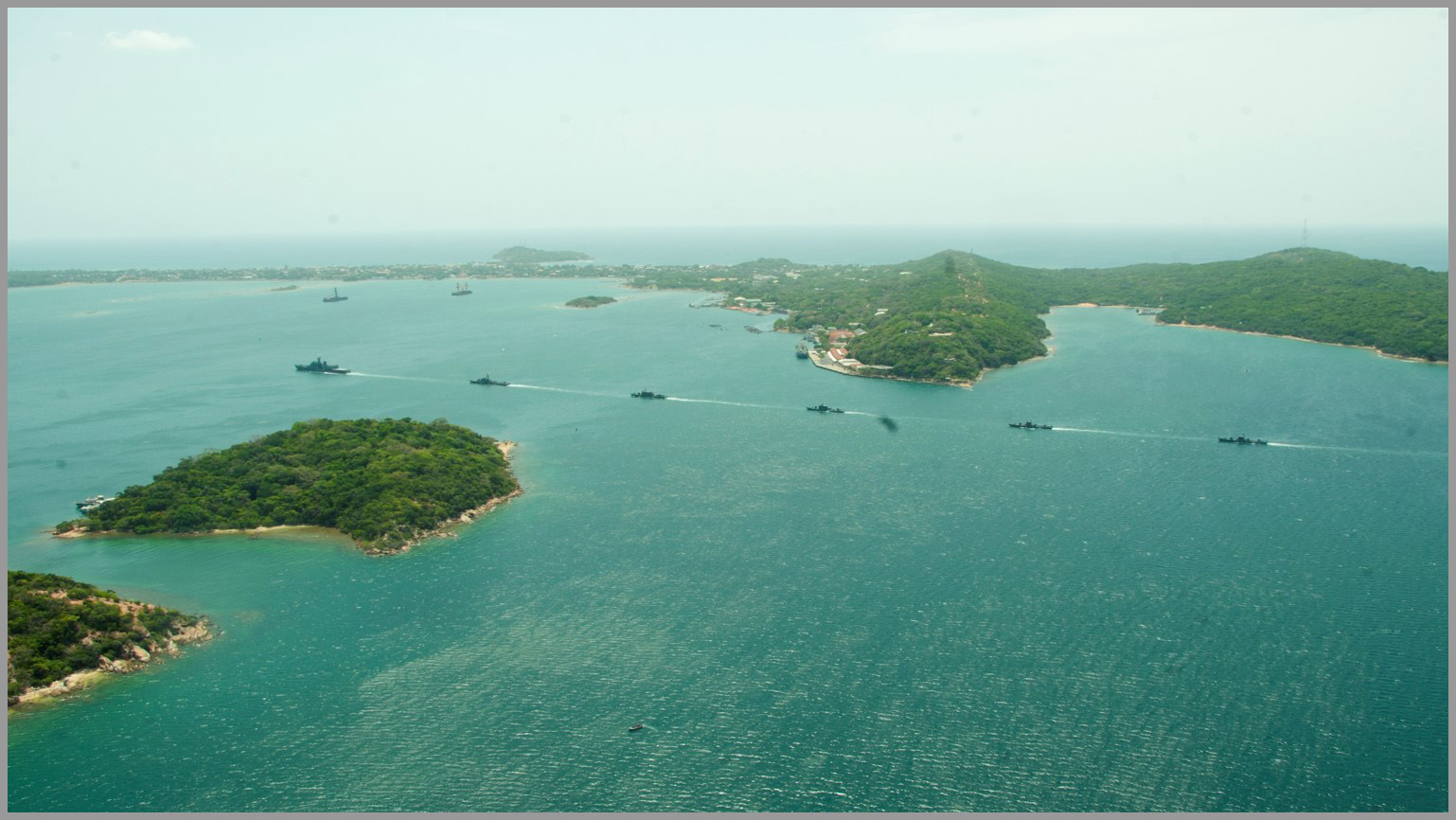
The history of Trincomalee dates back to ancient times in Sri Lanka. The place had previously gone by any titles, and ‘Gokanna’ was a Sanskrit reference in chronicles. The eastern seaboard extends over 300 km and has unparalleled beauty. The adjoining seas are endowed with beautiful reefs, shipwrecks, and arine life are paradise for diving: many foreigners and diving enthusiasts are attracted to the waters round them for mere diving pleasure. The virgin reef surrounding Pigeon Island is one of the country's marine protected areas and is magnetically attractive. Similarly, the treasure trove in the majestic arbour welcomed the East and West mariners from as far back as the late B.C. years.
Since ancient times, the deep-water natural harbour has drawn seafarers like Marco Polo, Ptolemy, and merchants from China, East Asia, and Arabia. The harbour has been a seaport since the days of the ancient Sri Lankan Kings. The chronicle of Mahavamsa contains the oldest known mention of the port of Gokanna, describing Panduvasdeva, King Vijaya's nephew, arriving at Gokanna in the fifth century BC to assume the throne of Lanka. The seaport of Trincomalee was a centre of attraction in the European geopolitical conflicts between English, Dutch, and French that ensued offshoot conquest for Trincomalee. In addition to its advantageous position, Trincomalee Harbour served a unique purpose for seafarers during the age of the sail. With a deep, narrow inlet and a low-lying landscape on either side, Orlando Cove on Sober Island provided the perfect backdrop for careening ship.
Historical shipwrecks, including HMS Diomede, foundered in the British landing of Trincomalee in 1795, and maritime remnants such as cannons and anchors are unquestionably heritage dive sites. Numerous artefacts from the British occupation of the harbour during World War II attest to its crucial maritime strategic importance at the time. Having bombed Colombo on 05th April 1942, the Japanese raided Trincomalee on 09th April, resulting in the sinking of HMS Hermes and her escort HMAS Vampire south of Trincomalee. Underwater sites of this epoch are the grand floating dock AFD 23, aircraft wreck debris disposed of by the Fleet Air Arm station, sites of ordnance disposal, and SS Sagaing, a 7996-ton steamship.
Admiralty Floating Dock 23 (AFD 23)
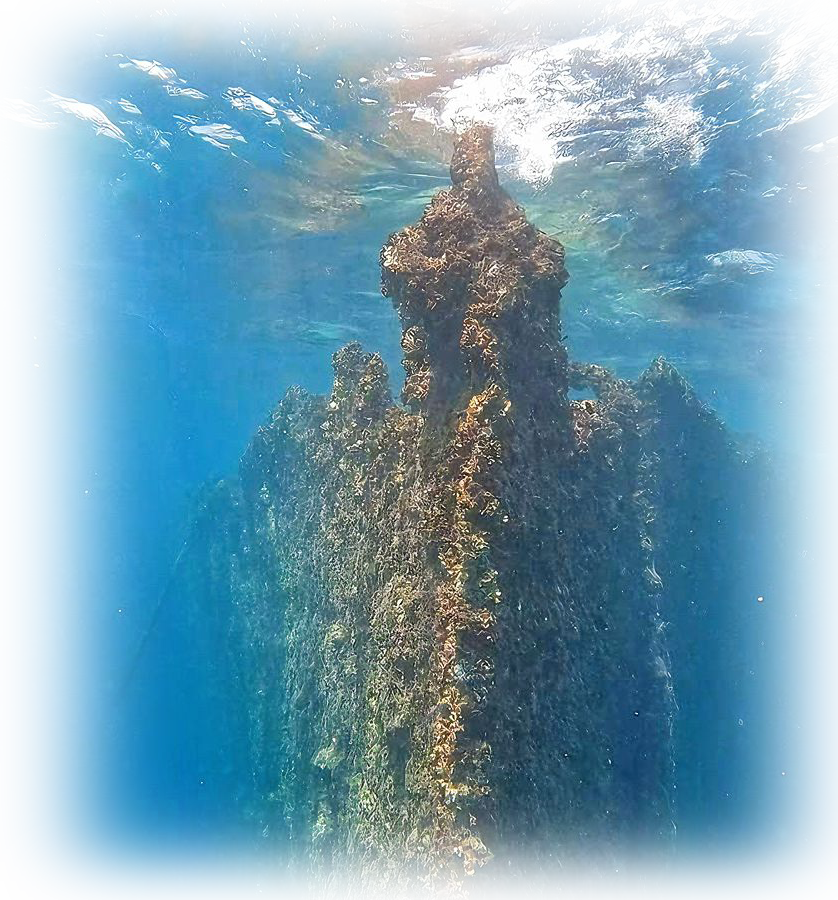
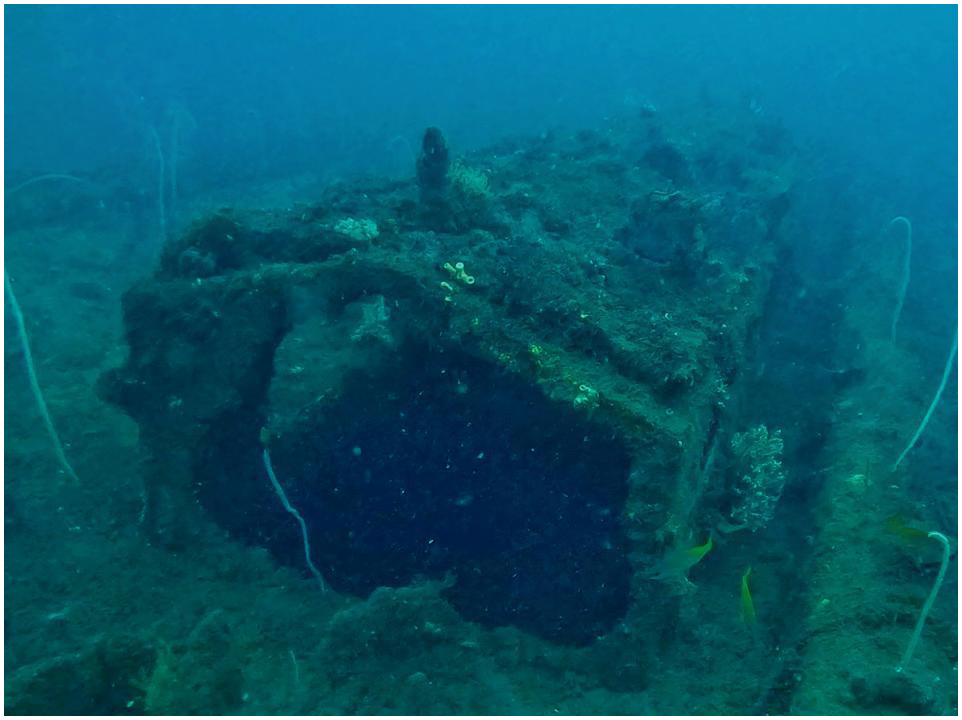
AFD 23 was built in Bombay, and upon completion in July 1944, she was towed to Trincomalee and moored off Sober Island to dock Allied warships during World War II. One of the most significant shipwrecks in the world was the 50,000-ton AFD 23, which sank on 8th August 1944 when buoyancy had failed while the 30,000-ton battleship HMS Valiant was in dock. Only half of this wreck remains at its final resting place in the Trincomalee harbour, as the collapsed rear half at the sinking was later salvaged for scrap iron. It had been a soaring site in the middle of the harbour until 1971 with one of the crane towers that remained above water, and that part was re-floated later. Today, the remaining part of the dock stays majestically, resting at 140 feet at the bottom and upper decks of the side walls at 80 feet. AFD 23 could be the second-best dive after the Hermes wreck off Batticaloa. The upper decks on the side walls contain many compartments that were imaginably workstations and machinery spaces, and the deck tops still hold numerous glass pane pan lights that allow sunlight to enter the space beneath.
HMS Diomede
At 140 feet, in cold and gloomy waters in the middle of the Back Bay, lies a historic wreck, the British Frigate that met her fate during the landing to capture the Ostenburg Fort of Trincomalee from the Dutch, HMS Diomede, a 44-gun fifth-rate, was built by James Martin Hillhouse and launched at Bristol on 18th October 1781. She belonged to the Roebuck class of vessels specially built during the American Revolutionary War, for service in the shallow American coastal waters. HMS Diomede, sailing under the command of Captain Matthew Smith, had arrived off Trincomalee in late July 1795 along with Suffolk, Hobart, Centurion, and troop transports, under the flag of Rear Admiral Peter Rainier, who was commanding His Majesty's ships in the East Indies with orders to conquer Trincomalee and other Dutch settlements on the Island. On 30 August 1795, Diomede foundered, having struck an uncharted rock in the bay while heading to shore with a heavy sailing vessel at her tow. Even today, a few of her nine-pounder and 18-pounder guns are visible, along with some ironwork and deck fittings. Though ostensibly all of her wooden structure has deteriorated with time, a thorough archaeological investigation of the shipwreck would disclose many details.
Aircraft Wrecks
The East Indies Fleet had been operating from Ceylon for most of World War II which later became the Eastern Fleet at the end of March 1942 with the arrival of Admiral Somerville. As a result, more air squadrons flowed into the island, mainly operated from aircraft carriers. More often than not, carrier escorts had been provided for east and west-bound convoys in the Indian Ocean. In Trincomalee, HMS Bambara was the Fleet Air Arm station at the present-day China Bay Air Force base. The Clappenburg Wharf has been purposefully built to facilitate the transfer of damaged and repair-bound aircraft to adjoining repair workshops from aircraft carriers. Eventually, irreparable aircraft and cannibalised parts ended up in the deep seas off Round Island, and creating a fascinating dive site reminisces wartime air operations existed. There was a wide belief that these aircraft were the famous Mitsubishi A6M, popularly known as the 'Zero', dive bombers that had fallen during the March 1942 raid, which is now found false, and none of the wrecks resemble the famous aircraft. And sufficient documentary evidence proves that they are dumped aircraft by the Fleet Air Arm.
SS Sagaing
The 138 m long passenger cargo ship, first launched on 24th December 1924, was hit by Japanese carrier aircraft bomber attacks whilst at anchorage in the Trincomalee harbour on 09th April 1942. On August 24, 1943, the damaged vessel was deliberately sunk in the water to create a pier for naval ships. The Sri Lanka Navy resorted to refloating the wreck, fully submerged under the sea, to make sea room for expanding berthing facilities in the harbour. The project got off the ground on 11th September 2017. Having refloated the wreck on 22nd March 2018, it was sunk again in the sea area of Elephant Point and Elephant Island.
SLN ships scuttled to create an artificial reef in Trincomalee harbour
Trincomalee harbour is home to a few wrecks of the contemporary era: the graveyard of decommissioned ships of the Navy where two Chinese Fast Gun Boats, Ex Rakshaka and Ex-Dhakshya, rest at Middle Ridge along with a slight tug boat. In the same vein, the Sri Lanka Navy more recently set a destination for their decommissioned ships, Ex Weeraya and Ex-Jagatha, off the Rocky Point in 2020. For adventurous divers, these sites are the ultimate playground, where they can discover hidden treasures and unravel the secrets of the deep.
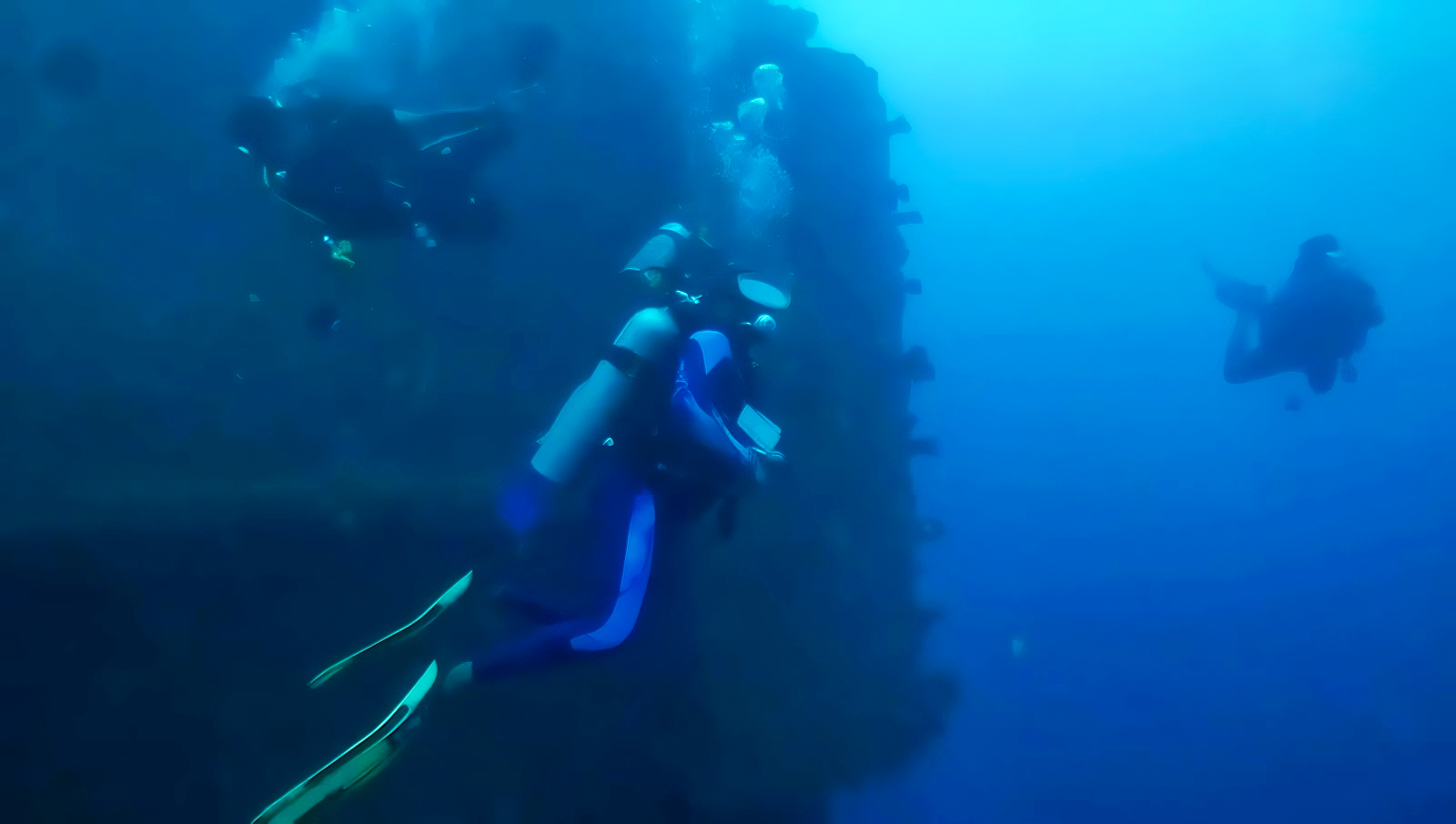
Although visibility varies periodically due to monsoonal rainfall and Mahaweli River waters mixing with the sea at its three vulnerable estuaries on the southern coast front of the harbour, diving in Trincomalee Harbour is possible all year long. Wreck diving is quite adventurous as murkily, dark sights of these wrecks encrusted with barnacles suddenly appear before the diver as he reaches the bottom. Occasionally, a fortunate diver may hear whale hums and a friendly whale shark lurking nearby as they frequent the harbour seasonally. Trincomalee is a hidden gem that offers a unique blend of ancient history and natural beauty. It is also a world-class dive site with its beautiful reef, shipwrecks, and diverse marine life. The promotion of recreational diving in Trincomalee Harbour is a timely need. Despite being located on naval premises, Trincomalee harbour has a great potential to entice diving enthusiasts, accompanied by maritime divers, to explore Trincomalee beneath the waves.
.jpeg)
.jpeg)
.jpeg)