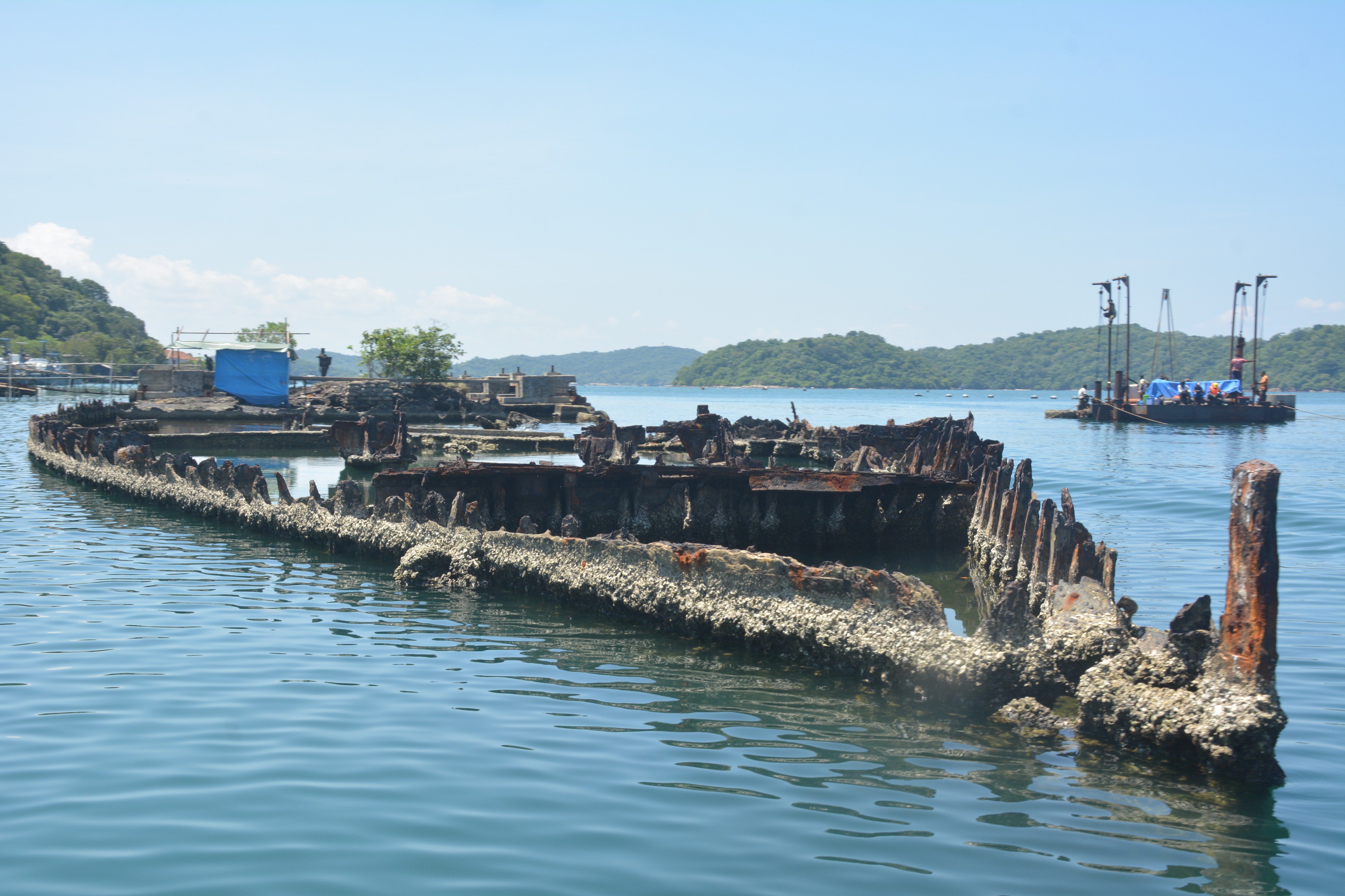
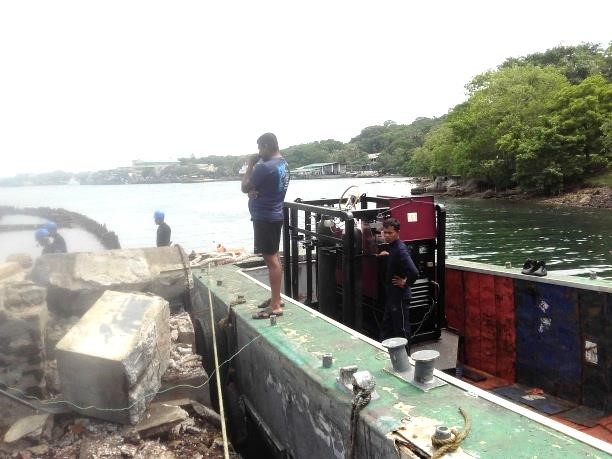
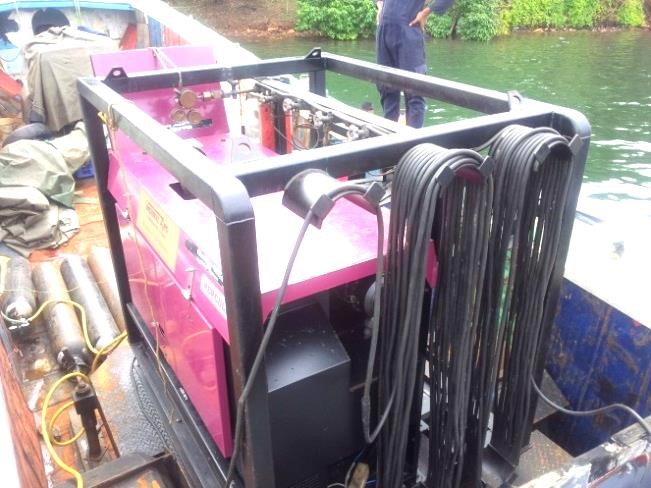
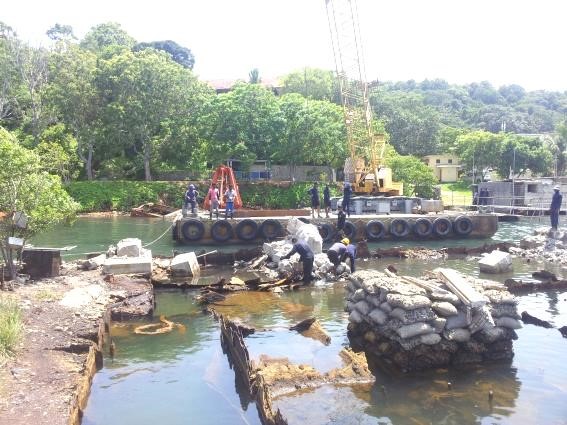
The Sri Lanka Navy’s salvage of the SS Sagaing in 2018 was a milestone in diving and salvage history, showcasing SLN divers' capabilities in conducting salvage operations with limited resources. This operation serves as an excellent case study on how the SLN manages salvage tasks by optimizing its human and material resources, along with employing innovative solutions to bridge gaps commonly encountered in the marine salvage industry..
Background
The SS Sagaing was a British passenger and cargo ship, launched on December 24, 1924, by Wm. Denny & Bros. in Dumbarton for P. Henderson & Co. With a gross tonnage of 7,994 and dimensions of 454.6 feet in length and 61.2 feet in width, the ship was equipped with a single screw and could achieve a speed of 13 knots. It provided accommodation for 137 first-class passengers and was primarily used on the UK-Burma route during World War II.
Constructed along the banks of Scotland's River Clyde, the SS Sagaing operated in the Far East trade, often referred to as the "road to Burma." Powered by a triple-expansion steam engine, it could reach a top speed of just over 14 knots. At the time of its accident, the SS Sagaing was en route to Rangoon, Burma, carrying a secretive cargo that included a significant amount of ammunition for Hurricane aircraft, mines, and depth charges (Robertson, 2005).
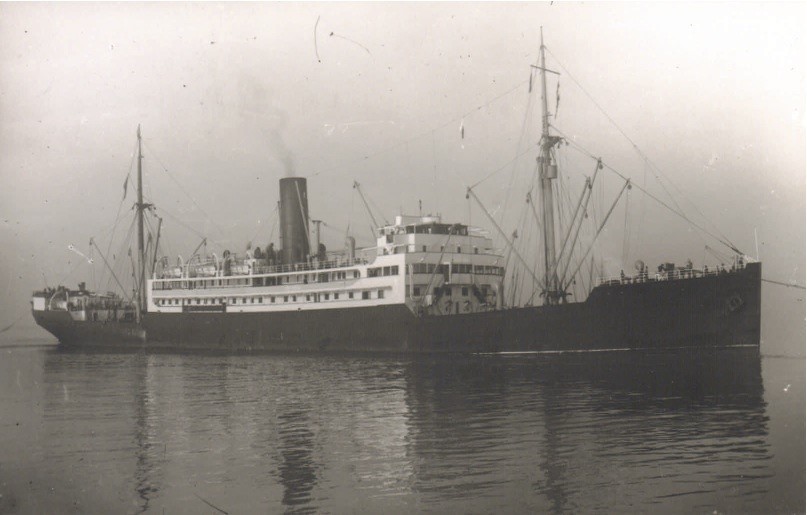
The passenger and cargo ship Sagaing was anchored in Trincomalee harbor on April 9, 1942, when Japanese aircraft launched an early morning bombing raid on the port. This heavy air raid was carried out by the Japanese carrier strike force commanded by Vice Admiral Nagumo Chuichi of the Imperial Japanese Navy (IJN), the same force that had attacked Colombo just four days earlier on Easter Sunday, April 5 (Services 1943). The Sagaing was reportedly hit by two bombs, one on the foredeck and another on hatch No. 4, causing the ship to catch fire immediately(“Https://Andthentheresphysics.Wordpress.Com/,” n.d.). The figure 7 depict the SS Sagaing in 1940 and its abandonment after the bombing(Robertson 2005).
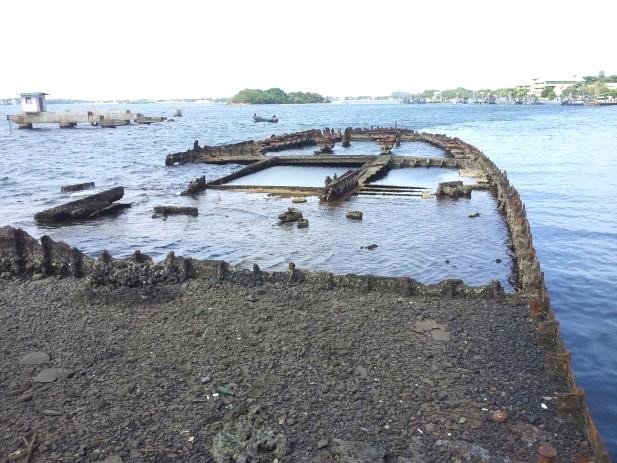
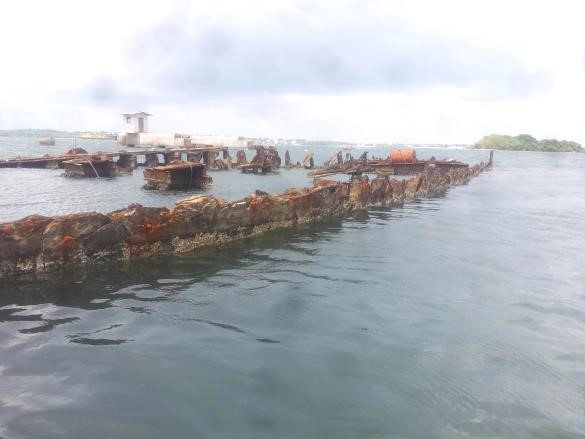
After being abandoned, the SS Sagaing drifted into Maley Cove in Trincomalee Harbor. On August 24, 1943, the damaged ship was deliberately sunk in the Naval Dockyard, reportedly by shellfire aimed below the waterline. The above-water parts were removed, leaving the wreck partially visible just above the waterline at coordinates 08°32.923'N, 08°13.496'E, where it served as a pier for berthing naval vessels.(“Massive-452ft-British-Merchant-Ship-Sunk-WWII-Finally-Raised-Sri-Lanka-Coast @ Www.Dailymail.Co.Uk,” n.d.).
Sri Lanka Navy Initiatives to Salvage the Ship Wreck
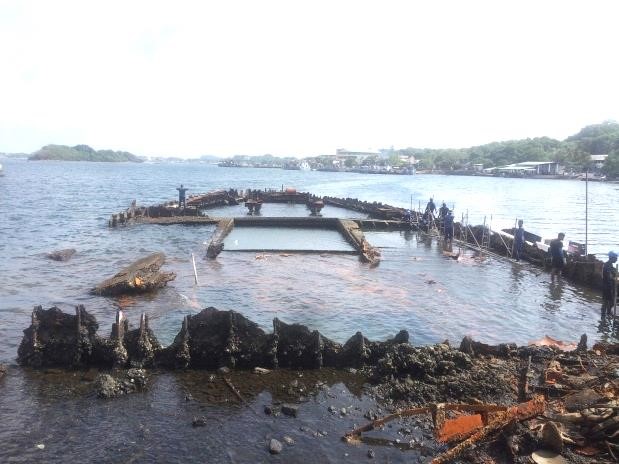
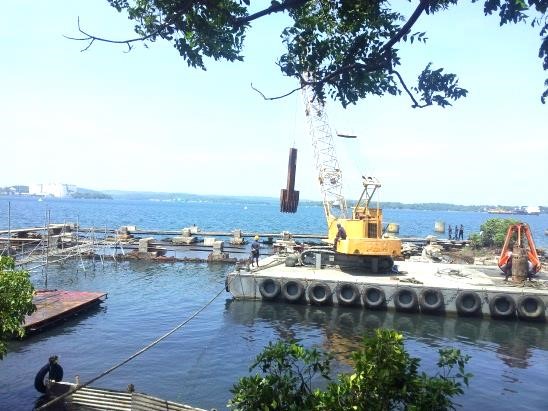
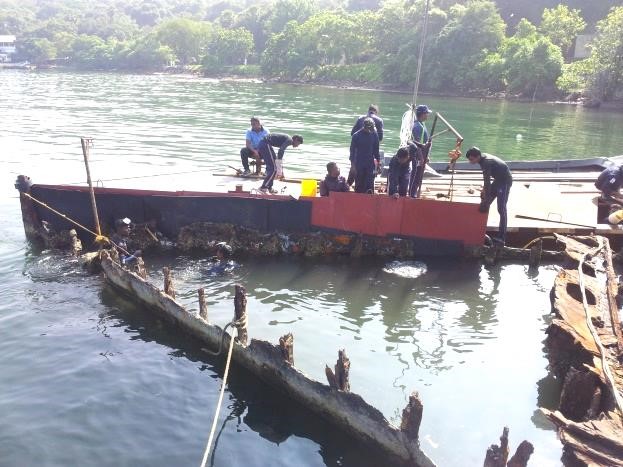
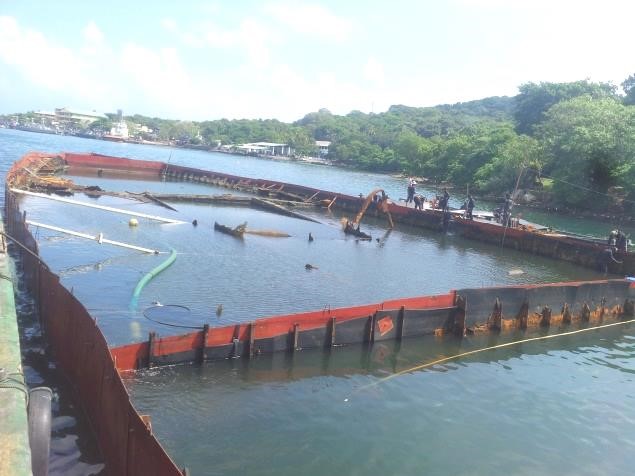
The Department of National Budget instructed the Navy to begin initial work on constructing a quay at the Naval Dockyard, which involved resuming an abandoned pier construction project. Then Commander of the Navy Vice Admiral Travis Sinnah's assigned the task to Command Diving Unit (East) to salvage the SS Sagaing as part of this broader initiative as the removal of the SS Sagaing wreck was deemed crucial for advancing the pier construction, as it was a significant obstacle to the project's progress. When Salvage operation of SS Sagaing started in October 2017 wreck was underwater for 75 years visible as in figure 8.
Salvage Approach
The limited data available presented a major challenge in developing an effective salvage plan. The operation relied on visual observations, physical measurements, and open-source information, as outlined in Table 1. Additional insights on the cargo and bombing damage were sourced from The Last Voyage of the Lucette (Robertson, 2005), which focused on the incident itself. To gather the necessary data for the salvage, a comprehensive survey of the wreck site was conducted. This involved locating the wreck, examining and measuring the area, estimating the wreck's weight, and collecting initial information, as shown in Table 1 below. Consequently, the salvage operation employed a trial-and-error, step-by-step method to assess feasibility, ultimately leading to a successful outcome
Tags:
SS SAGAING SALVAGE OPERATION