Refloating A 520, Ex 'MV Invincible'
Background
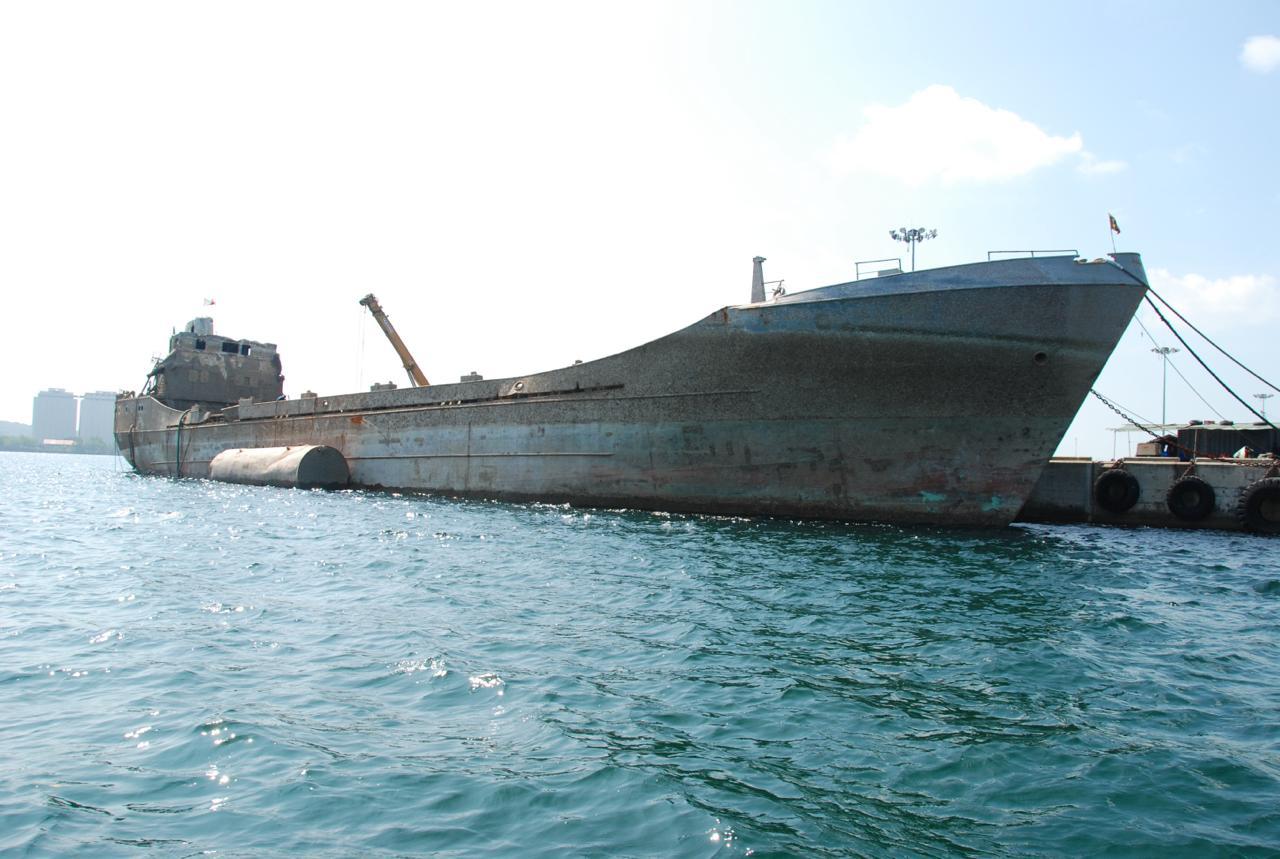
The SLNS A 520, formerly known as MV Invincible, was a logistic support ship acquired by the Sri Lanka Navy (SLN) in 2003 through a court order after it was intercepted transporting illegal migrants. Built in 1971, this 80-meter-long cargo vessel played a crucial role in SLN's logistic and deep-sea operations against LTTE armories and vessels from 2007 onwards. However, on May 10, 2008, during the early morning hours, the vessel sank at Ashroff Jetty in Trincomalee Harbour due to an LTTE frogman attack using limpet mines.
Salvage Operations
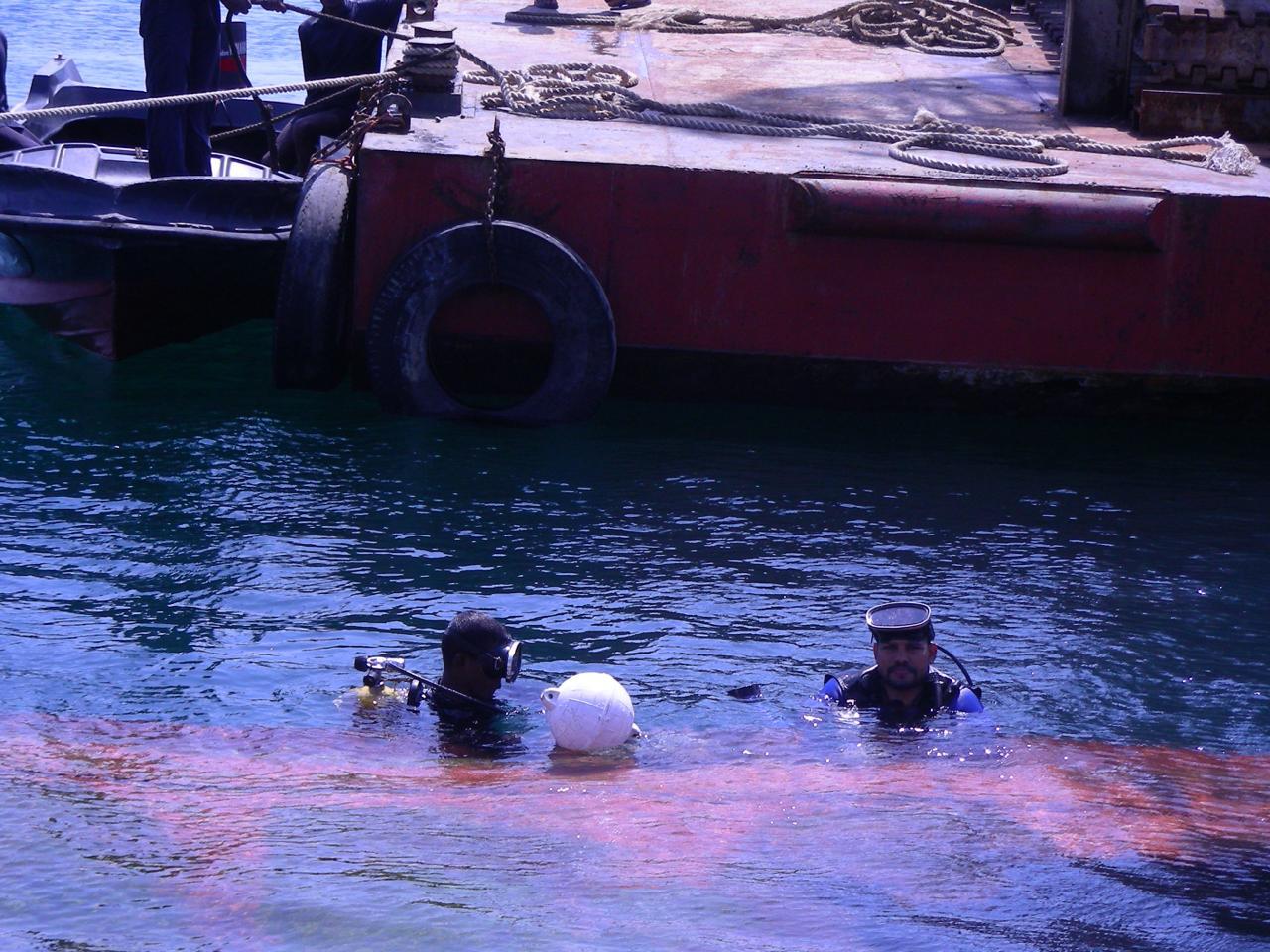
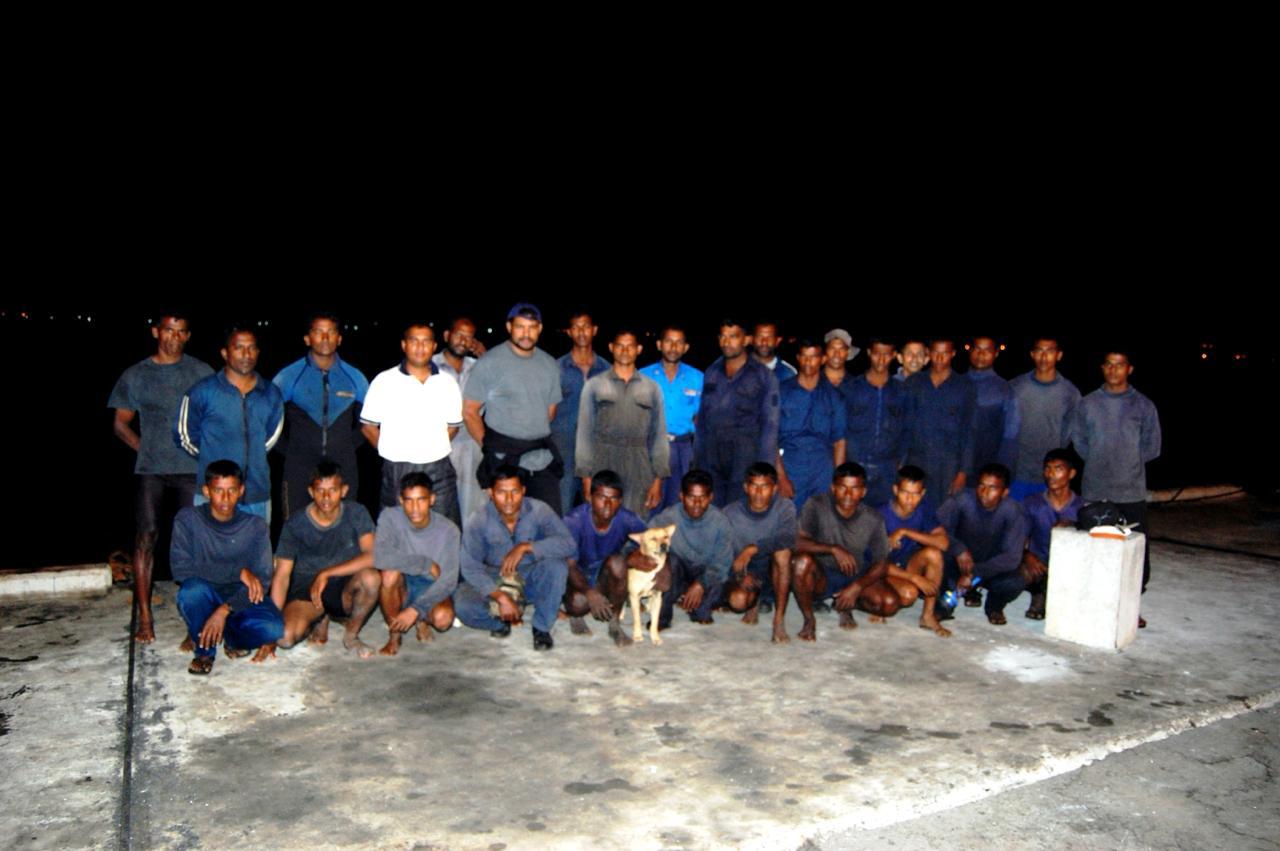
Following the sinking, Vice Admiral Wasantha Karannagoda, then Commander of the Navy, directed Rear Admiral Ananda Pieris, Commander Eastern Naval Area, to oversee the salvage or removal of the shipwreck. The task was assigned to the Diving and Salvage Unit (East), under my leadership as the Command Diving Officer (East). This complex operation spanned nearly eight months and was conducted amidst wartime threats and financial constraints.
Marine salvage operations are highly complex and aim to recover vessels, cargo, or other assets after maritime accidents. Such operations are essential to prevent environmental damage, recover valuable property, and restore safe navigation. In this particular instance, the incident occurred at Trincomalee Harbour Jetty, where merchant vessels regularly berth. Removing the shipwreck was critical to ensuring the smooth continuation of harbor operations and facilitating essential maritime activities.
I understand this was a huge task where neither I nor the naval diver had experienced a similar task before and must undertake the operation in trying circumstances. During that time, the Trincomalee harbour and the naval base faced multiple forms of threats from LTTE. After having discussions with HOD’s of Eastern Naval Command, senior diving officers at NHQ and diving teams I determined to get on with the task with minimal available resources due to the prevailed war situation as well as financial constraints faced at that time.
The project’s success was largely due to the collaborative efforts of multiple departments under the guidance of the area commander. While this report acknowledges the invaluable contributions of all involved, space constraints prevent naming everyone individually.
Salvage Approach
Although this was a very lengthy process which took nearly eight months to refloat and move the vessel from the sunken location to Olanda cove in Trincomalee harbour, for the purpose of briefly narrate I will make this article into a very concise report, only with essential footsteps.
A comprehensive survey of the shipwreck was conducted for planning and execution of different phases of salwage operatrion. We make a basic project management plan and share among the team leaders covering the different aspects such as fabrication of additional bouyancy tanks, obtaining necessary rigging gears, pumping & dewatering arrangements and conducting parelle event to ensure a efficient, effective and safe salvage operation. There we also fabricated a non scalled a wooden model of the ship as per available ships details for easy briefing and debriefing purposes of salvage works / jobs to team members. With the concurrence of respective HOD’s the teams engaged in this operation never change, we adopted a blocked leave procedure for the groups during the project. This was vital for timely completion of each phase of the operation.
Environmental Context - The vessel was located in shallow waters and high-traffic zone in the middle of the Trincomalee harbour, posing a risks of oil spills if fuel tanks are damaged. The weather conditions during the operartion the wind, waves, underwater visibility and night diving capability.
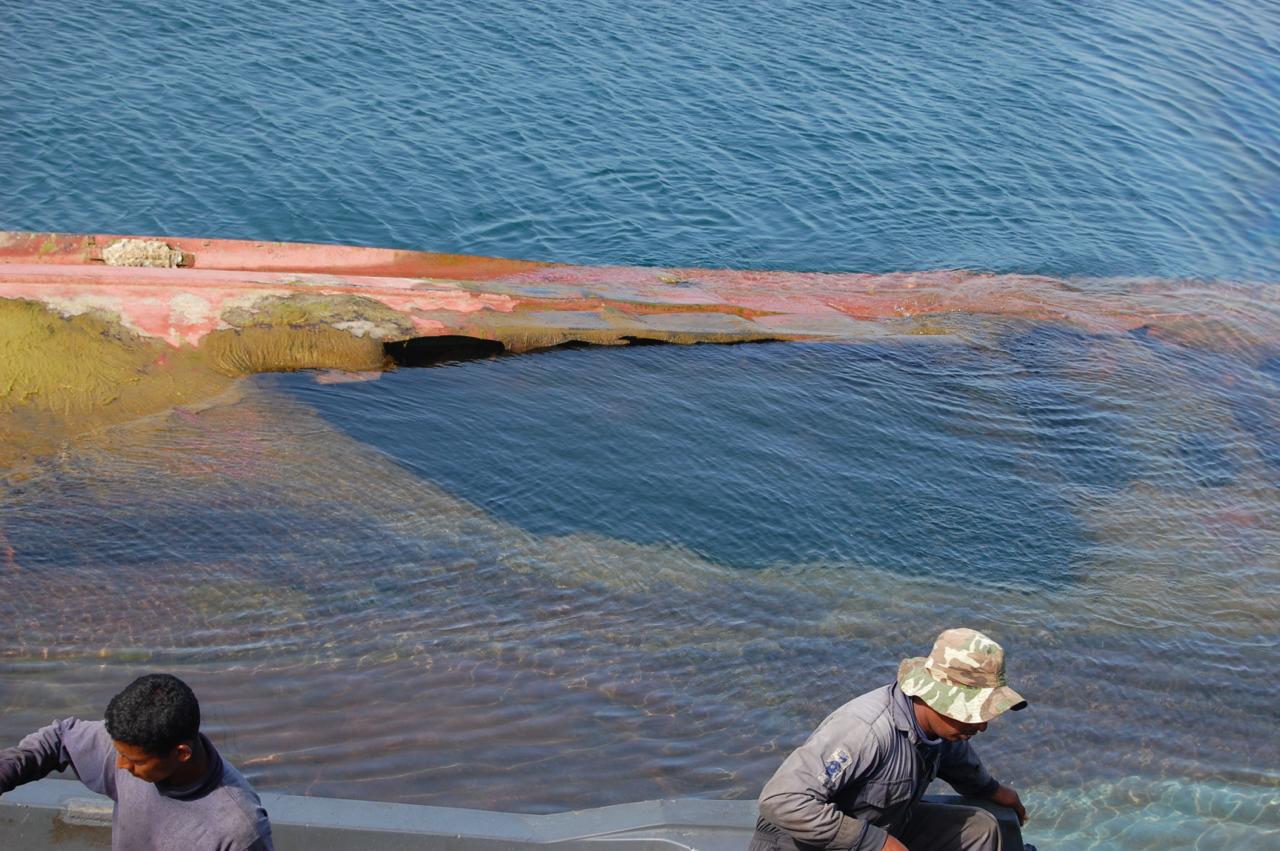
Assessment - Few rounds of inspections were conducted to evaluate the vessel’s stability and exsisting condition, extent of damages, the wreck was lying on the seabed on its port side therefore potential environmental hazards could occurred when turing the vessal into its up right positon.
Coordination - Security measurers during day & night against enemy, safety measurers against overale onsite hazrds, smooth coordination and simultanous works with divers, other technical groups, hull engineering, marine engineering, electrical engineering, logistic, SLN
support teams, SLPA members, dragger operators tugboat operators, etc. was the main concerns.
Mobilization - All heavy equipment mobilized to the site by road with necessary security arrangements such as cranes, buoyancy / fuel tanks, air compressors welding & cutting equipment etc. and the supporting vessals, pontoons and tug boats ware bearthed close by or called when required.
Execution
Phase 1 - Although underwater visibility was very poor at early stages, on 11 May 2008 onward diving teams were deployed for inspections of the wreck and possible clearing of the debris. During the period Admiral PH De Silva, then Captain, the commanding officer of SLNS Sauyra, also carried out an inspection and with his past experiences he discovered, evidence of unexploded limpet mines beneath the ship's side through a damage portion of hull plating. With that alarming news, I seized all other operations and focused on clearing of those unexploded mines on priority basis. With the assistance of barge mounted dredging gear make the access reach to the unexploded mines beneath the ship’s side and after three days of hard work we recovered them safely and initiated disposal action at Sober Island.
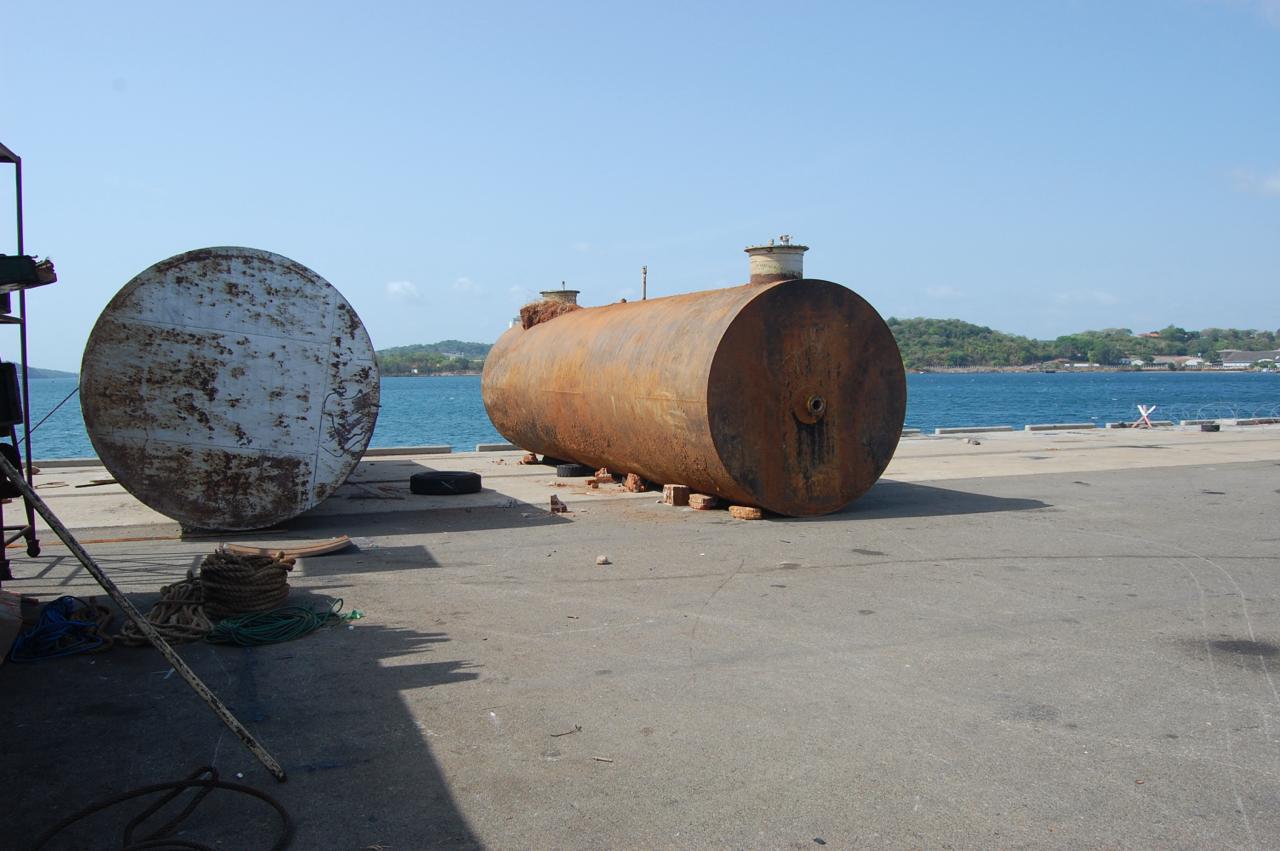
Phase 2 - Thereafter placed pulling arrangement to pull the wreck towards the Jetty and start removal of additional weights by using a surface crane. On completion of removing all possible removable components secured the wreck to jetty with steel cables. In this phase simultaneously fabricated the rigging arrangements of additional buoyancy tanks with the use of abandon 75,000 liters fuel tank obtain from friendly organizations close by. And carried out replating the damaged portion of the STBD shipside, underwater and surface welding techniques used for this purpose. After complete replating starboard side turned the ship into its upright position by using appropriate hauling arrangements.
Next step was to repeat the same operation for port side damages, for that again wreck turn into other side where port side comes up. Before turning into upright position, the fuel tanks tank was placed in the cargo hatch for additional buoyancy. After complete patching of port side damages again she turns into its upright position and secured to the jetty with steel cables.
Phase 3 - Since we do not have proper salvage pontoons, stabilization was the main issue we face during dewatering due to free surface effect of remaining water volumes, ship’s tilt movements was uncontrollable and unpredictable however we managed to complete the task with a lot of difficulties and failures. whiles dewatering some time we had to redo the same steps, which burns a lot of man hours and time.
At final recovery phase we had to use many pumps available within the dockyard and in addition to them we hired two eight inch submersible pumps and place them in the engine room and one of the lower deck compartment after ensuring the water tightness of those compartments. A mixture of clay and cement used to patch the small damages and leaks whilst dewatering.
Phase 4 - When it comes to final refloating stage of this vessel we had to use all available improvised buoyancy enhancement gears, lifting bags etc. to maintain the stability and positive buoyancy of the wreck. After fully refloating of ship check and ensure the watertight integrity of underwater area, correct small leakages in replated areas and once ship regained her own stability and buoyancy, cleared all additional buoyancy arrangement and secured to the jetty.
Phase 5 - Finally carried out other necessary repairs and rigged the towing arrangement to move the ship from Ashroff Jetty to Olanda cove for anchoring there. She was pushed with the tugboat and anchored at the chosen location in Olanda cove.
Challenges Encountered
The operation was fraught with difficulties although we had skilled manpower we are lack of proper salvage equipment to undertake salvage job of that magnitude. Ships hull exposed to a huge underwater explosen, it caused numerous damages to hull plates with sharp edges. Working environment was very hazardous. Removal of such edges and reinforcing the structure essential before replating damages.
The free-surface effect posed a persistent threat to stability and endenger to securing arrangements. To mitigate this, supplementary lifting arrangements fixed to the ship side along with lifting bags, but uncontrollable tilting movements always present during dewatering.
Inside the wreck visibility was zero and safety remained a top priority. Divers were equipped with specialized gear to navigate confined and hazardous spaces. Rigorous safety protocols were enforced, and teams received daily briefings to address evolving risks. Despite these precautions, the operation demanded unwavering focus and precision from all involved.
A Legacy of Resourcefulness
The successful refloating of the A520 at Ashraf Jetty stands as a testament to the resilience, creativity, and technical expertise of the Sri Lanka Navy. This operation highlighted the enduring value of human ingenuity in the face of limited resources. By leveraging makeshift tools and innovative techniques, the Navy not only restored a vital asset but also reinforced its reputation as a formidable force in maritime operations.
The mission’s success also had a profound impact on morale. It demonstrated the Navy’s ability to adapt and thrive under challenging circumstances, instilling confidence in its capacity to tackle future adversities.
Lessons Learned and Future Prospects
The A520 salvage operation provided invaluable insights for future endeavors and key lessons include:
Measures Ensuring watertight integrity and stability, the enhanced buoyancy mechanisms are crucial for managing complex salvage operations. The safety protocols, including comprehensive risk assessments and real-time monitoring, could further mitigate potential hazards.
Adaptability in execution flexibility and creativity remain essential for overcoming unforeseen challenges. The A520 mission demonstrated that innovative thinking, combined with meticulous planning, can yield remarkable results even in the most constrained circumstances.
Collaboration and Resource Optimization The operation underscored the importance of inter-agency collaboration and resource-sharing. Partnerships with regional navies and the acquisition of specialized salvage equipment, such as dedicated pontoons, could significantly enhance operational capabilities.
Measures ensuring watertight integrity and stability, along with enhanced buoyancy mechanisms, is crucial for managing complex salvage operations. Safety protocols, including comprehensive risk assessments and real-time monitoring, can further mitigate potential hazards.
Adaptability in Execution
Flexibility and creativity remain essential for overcoming unforeseen challenges. The A 520 mission demonstrated that innovative thinking, combined with meticulous planning, can yield remarkable results even in the most constrained circumstances.
Collaboration and Resource Optimization
The operation underscored the importance of inter-agency collaboration and resource-sharing. Partnerships with regional navies and the acquisition of specialized salvage equipment, such as dedicated pontoons, could significantly enhance operational capabilities. However this is debatable due to prevelled security situation in Trincomalee harbour during 2008.
Conclusion
The A520 salvage mission remains a benchmark of adaptability and resilience, showcasing the Navy’s unwavering spirit in overcoming monumental challenges. This operation not only restored a key maritime asset but also set a new standard for ingenuity and teamwork in marine salvage. As the Sri Lanka Navy continues to evolve, the lessons learned from this mission will serve as a foundation for future successes, ensuring the preservation of vital assets and the safeguarding of national interests.
.jpeg)
.jpeg)