SRI LANKA NAVY’S TRIBUTE TO HMS HERMES : COMMEMORATIVE DIVE TO HORNOUR THE FALLEN CREW
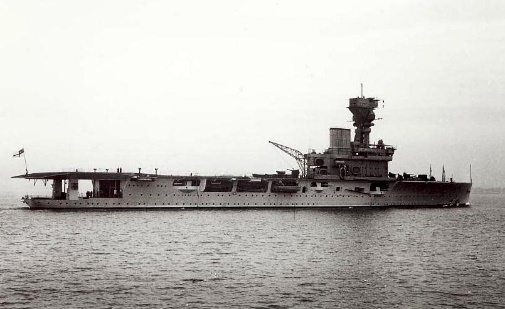
HMS Hermes, the world’s first purpose-built aircraft carrier, was a groundbreaking vessel commissioned by the Royal Navy in 1924. However, its remarkable career met a tragic end during World War II off the coast of Batticaloa, Sri Lanka, marking a dark chapter in naval history.
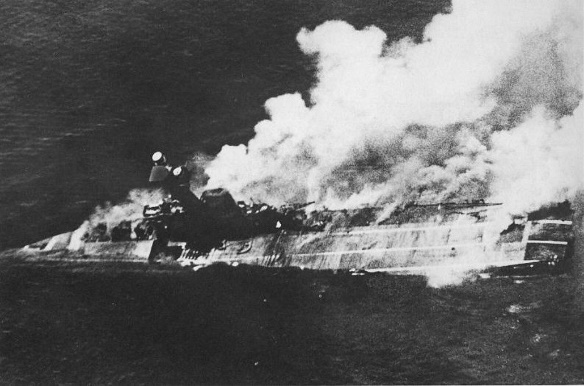
On April 9, 1942, HMS Hermes was targeted by the Imperial Japanese Navy during their offensive in the Indian Ocean. The carrier, accompanied by the Australian destroyer HMAS Vampire, had left Trincomalee in an effort to evade Japanese forces. Despite their precautions, the ships were spotted by enemy reconnaissance aircraft near Batticaloa.
Soon, A fleet of over 80 Japanese Aichi D3A “Val” dive bombers, launched from the carriers Akagi, Soryu, and Hiryu, attacked HMS Hermes the carrier task force led by Vice Admiral Chūichi Nagumo, which attacked Colombo on 05 April 1942. The carrier, unarmed with sufficient anti-aircraft defense or fighter cover, became a vulnerable target. Within minutes, she was struck by numerous bombs, leading to catastrophic damage. HMS Hermes sank rapidly, taking the lives of 307 crew members, including Captain Onslow and 28 Royal Marines demonstrating humanity amidst the chaos of war.
After the war the Admiralty compiled an official report, H.M. Ships Damaged or Sunk by Enemy Action 03 September. 1939 to 2nd Sept. 1945, which provides brief accounts of the attacks on all Commonwealth warships lost. The entry for Hermes reads as follows:
“HERMES while operating south of Trincomalee at 23 knots was attacked and sunk by Japanese aircraft. At 1035 the first bombs struck the ships hits being registered aft and on the forward aircraft lift. From this time on HERMES was repeatedly hit. Both boiler rooms were put out of action and the forward aircraft lift was wrecked. At 1050 the ship was immobilised, on fire and had a heavy list to port. At 1055 HERMES capsized to port and sank.”
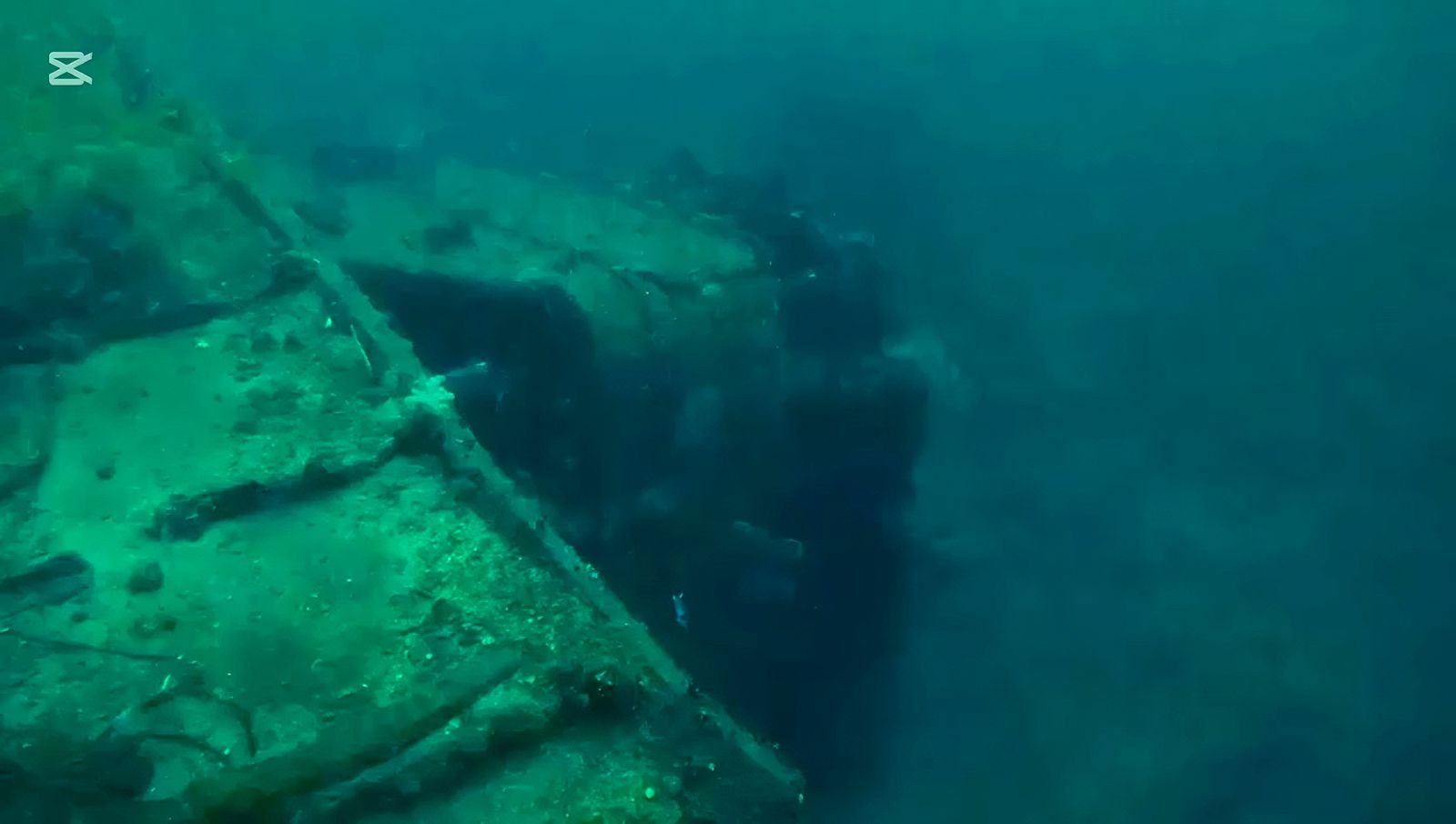
Today, the wreck of HMS Hermes resting at a depth of approximately 55 meters (180 feet), about 8 nautical miles off the coast of Batticaloa and rediscovered decades after the war, the site is now one of the world’s most sought-after wreck dives.This underwater relic has become one of Sri Lanka’s most iconic dive sites, attracting divers from around the world. The wreck, largely intact, is a haunting yet beautiful site, encrusted with coral and surrounded by abundant marine life.
The HMS Hermes dive site is not just a heaven for underwater explorers but also a historical monument. It serves as a reminder of the sacrifices made during World War II and the resilience of those who lived through it. The wreck is remarkably well-preserved, with its hull and key features still intact. Divers can explore the flight deck, aircraft hangars, and other sections of the ship, offering a poignant glimpse into history. The site is also a vibrant ecosystem, with corals, sponges, and schools of fish adorning the remnants of the ship.
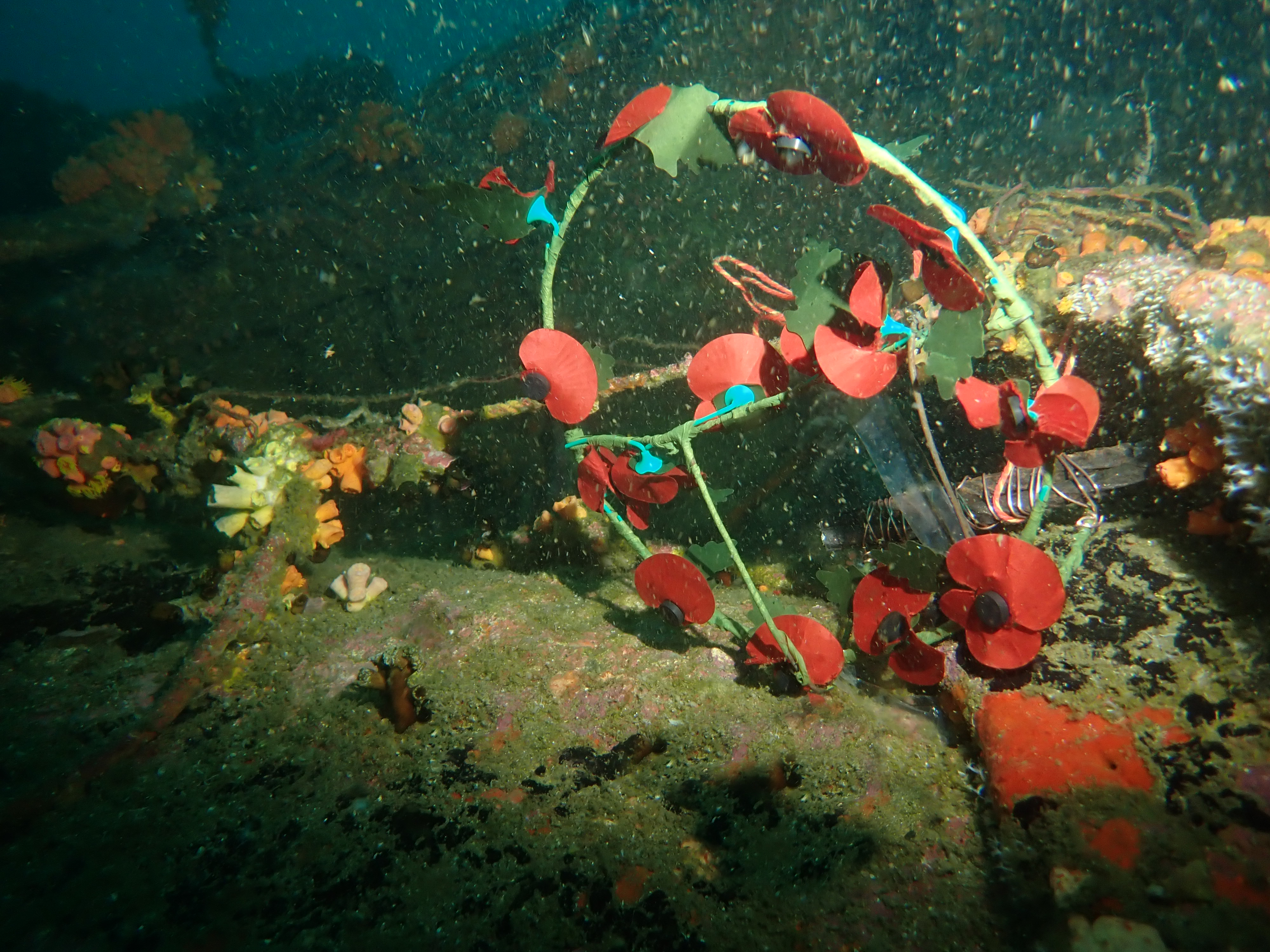
The Diving unit of Sri Lanka Navy conducted an exploratory diving exercise on 30 June 2024, to make a tribute to the Commanding Officer and crew of HMS Hermes who perished in the attack. The Commander of the Sri Lanka Navy Vice Admiral Priyantha Perera and former Commander of the Navy Admiral Piyal De Silva(Retd) also joined to this remarkable expedition, both Commanders laid a wreath of poppies and honoured heroes of HMS Hermes. This mission was not just an underwater adventure but a meticulous effort to preserve the remains of a historic vessel and protect the stories it holds for future generations.
However, the HMS Hermes dive site is not for beginners. The depth and occasional strong currents make it a challenge suitable for advanced divers. The wreck is also a war grave, and visitors are encouraged to approach it with respect, honouring the memory of the sailors who lost their lives. HMS Hermes’s wreck continues to draw divers, historians, and maritime enthusiasts, serving as a solemn reminder of the war’s maritime battles and the enduring mysteries of the ocean.