THE SRI LANKA NAVY’S PIONEERING EXPEDITION TO NIL DIYA POKUNA
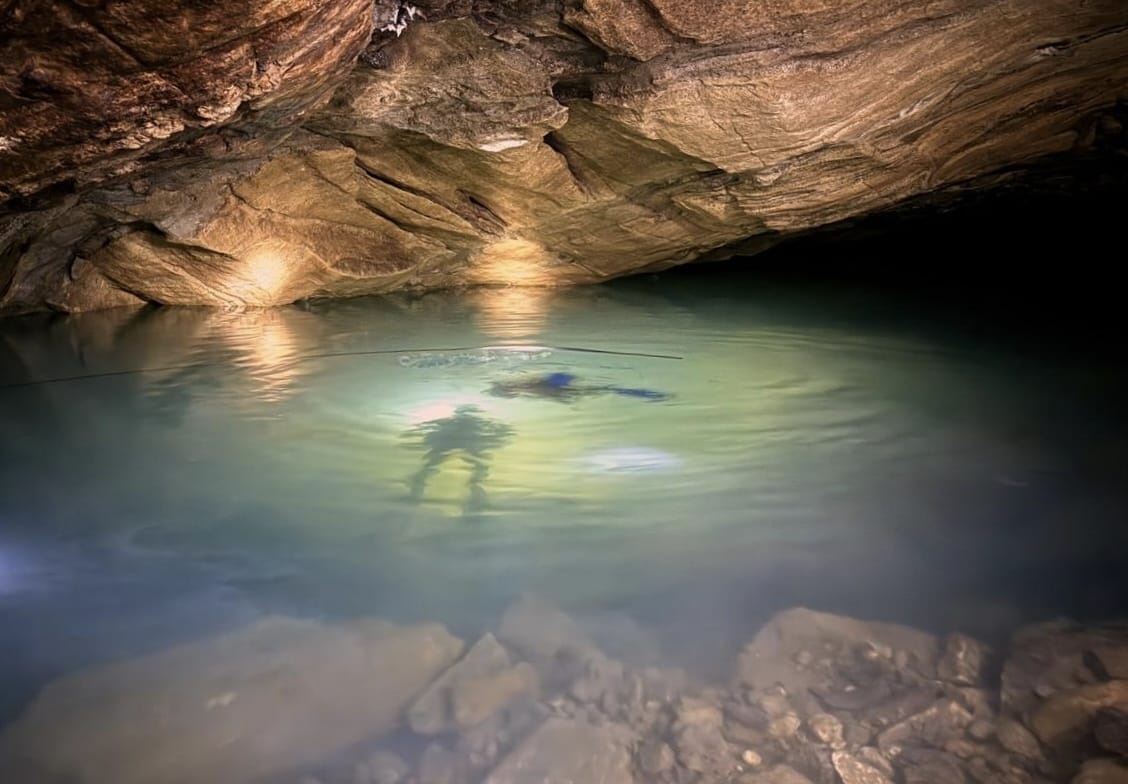
As part of its longstanding commitment to advancing maritime exploration, the Sri Lanka Navy launched an extraordinary expedition into the depths of one of the island’s most mysterious underwater caves, Nil Diya Pokuna. Under the directives of the Commander of the Navy, a team of dedicated divers ventured into this enigmatic aquatic realm from 15 to 18 May 2024. Their mission was to document and map the cave’s intricate layout and gain invaluable insights into this underwater treasure. This expedition is one the step in milestone, marking the Diving branch of SL Navy 60th anniversary, showcases not only the remarkable skills of the Navy's diving unit but also the brave pursuit of knowledge that drives their operations.
A Dive into History and Mystery
Situated within a network of tunnels near Ella, Nil Diya Pokuna is a site of both historical and mythological significance, with lore dating back to the reign of the legendary King Ravana. The pond “Nil Diya Pokuna” has remained largely unexplored, with only a preliminary survey conducted by Sri Lankan technical diver Darshana Jayawardena in recent years. Despite its potential as a thrilling tourist attraction, this unique underwater pond has yet to be comprehensively documented. Seizing this opportunity to enhance understanding and promote safety, the Sri Lanka Navy organized a meticulous survey of the site. This endeavor not only reinforces the Navy’s role in the nation's development but also aligns with its commitment to expanding its operational and technical capabilities.
Preparation: A New Frontier for Navy Divers
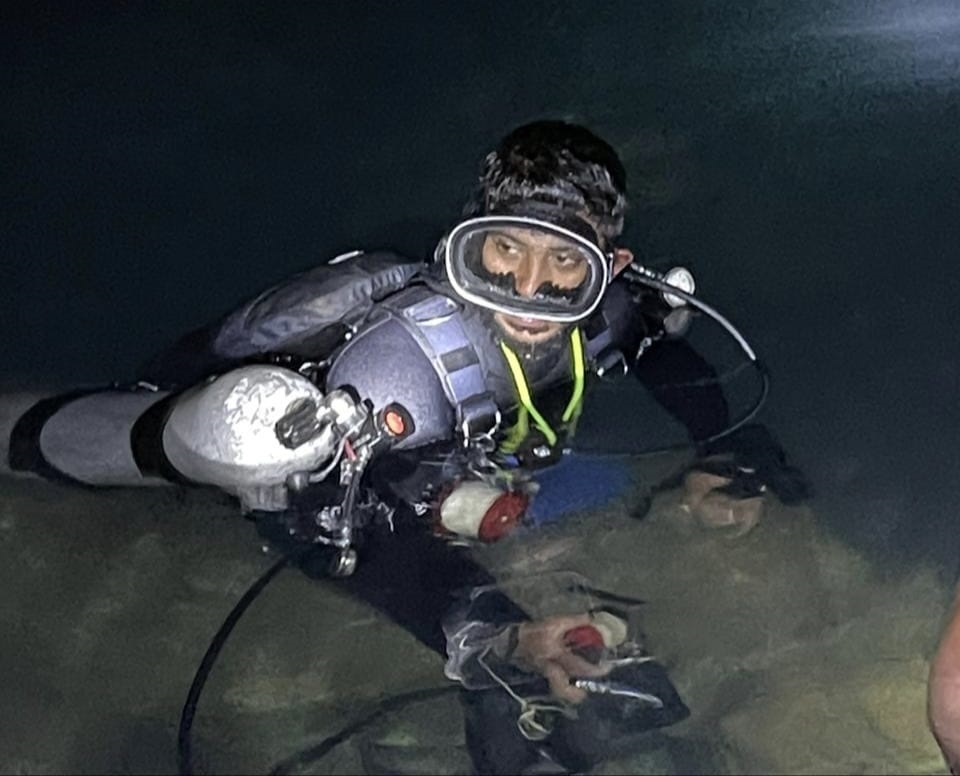
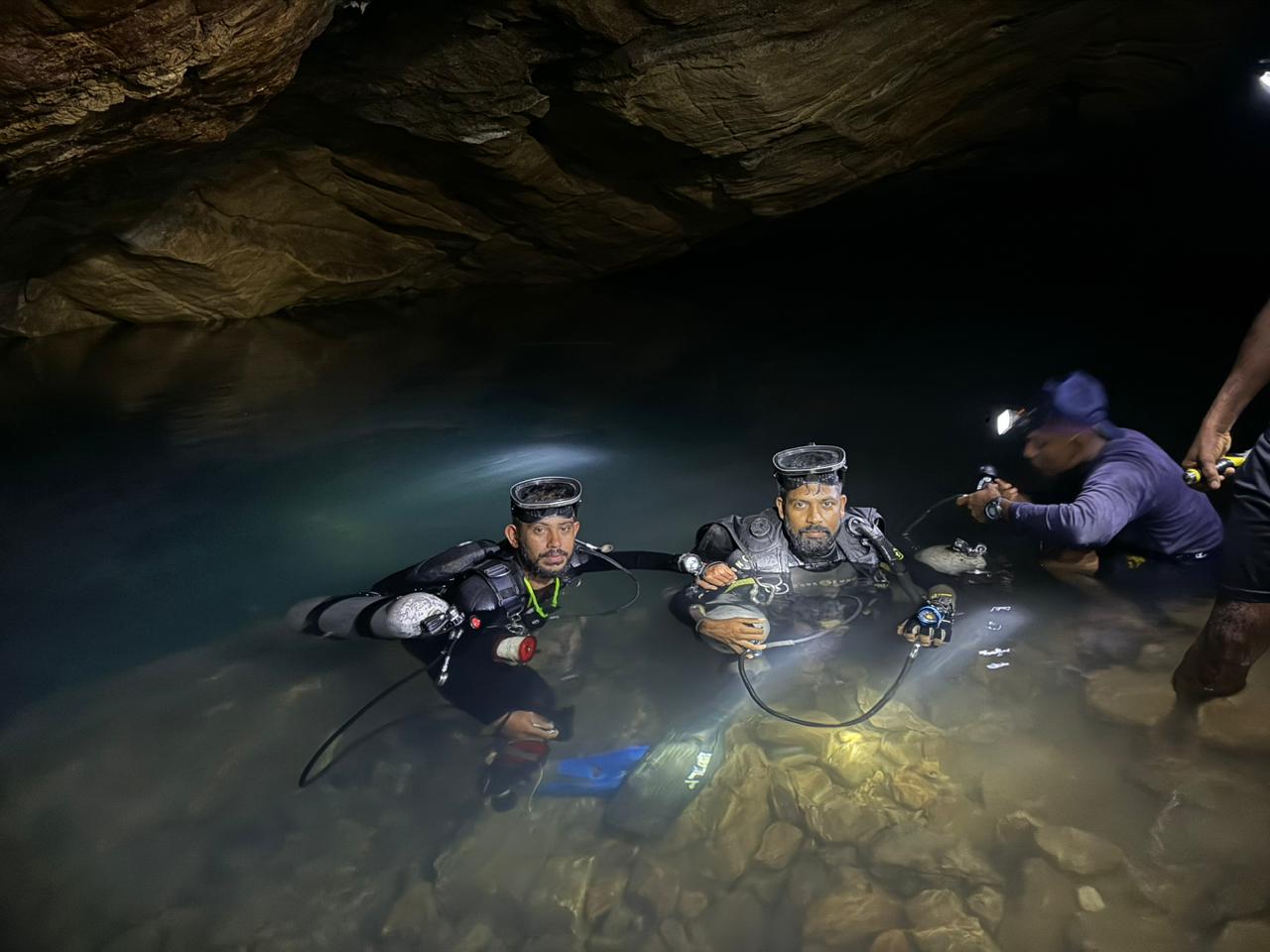
Cave diving presented new challenges for the Navy divers, who had not previously undertaken such specialized underwater operations. Initial research began with Mr. Jayawardena’s 2019 map, which provided a preliminary understanding of the cave's layout. This collaboration proved invaluable, offering insights into the specific techniques required for cave diving, including the use of side-mount SCUBA setups, specialized lighting, and safety markers, all of which had to be sourced externally due to their unavailability in the Navy’s standard equipment stores.
Preparation also included rigorous simulation exercises in the waters of Trincomalee, where divers practiced using cave diving equipment during the dark hours, simulating low-visibility conditions. These simulations were essential for building the team’s confidence and refining the precision needed for such a challenging expedition.
Execution: Mapping Sri Lanka’s Largest Underwater Cave
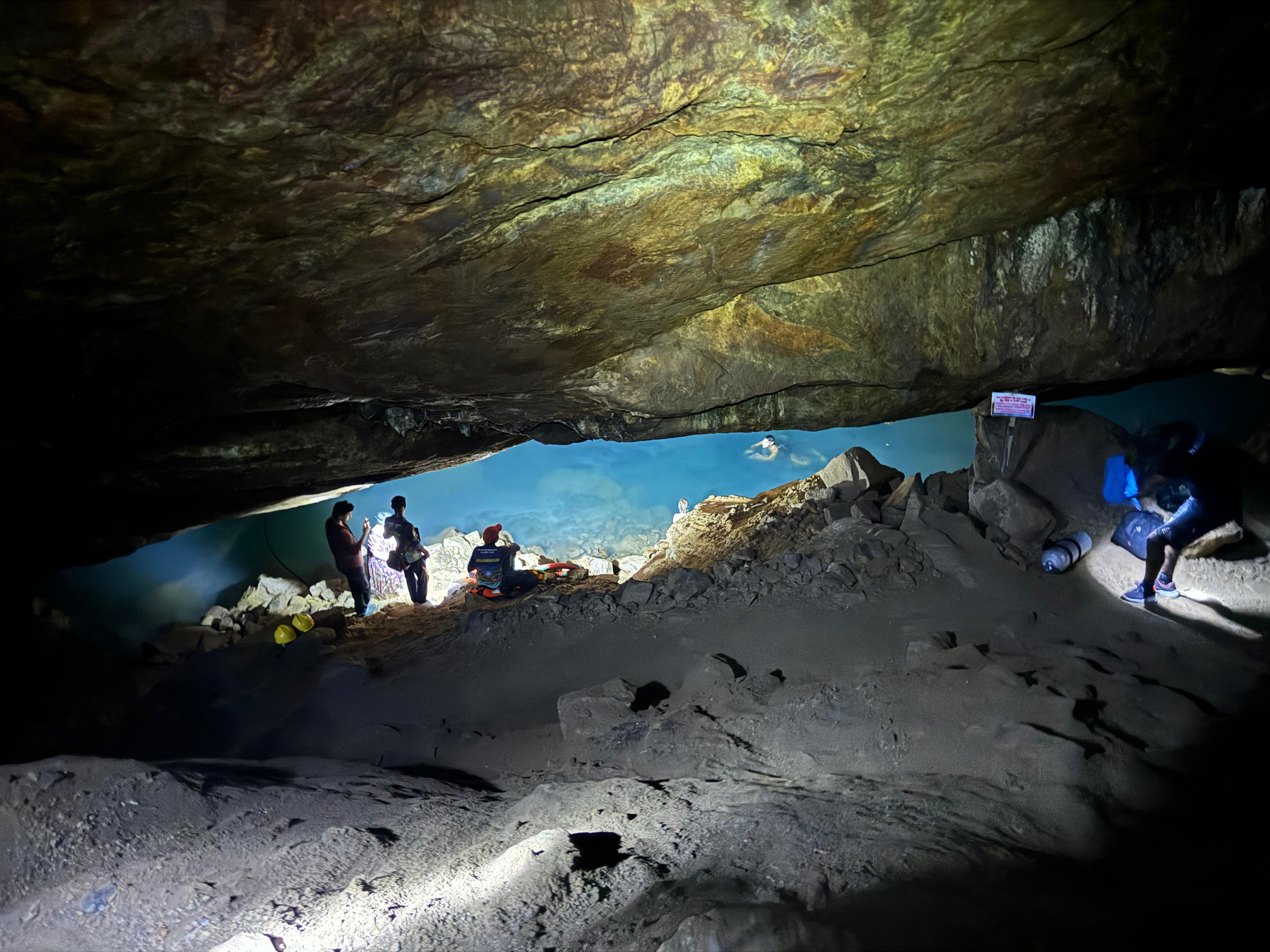
On 15th May, the team comprising four diving officers and nineteen diving sailors, began their journey to Nil Diya Pokuna. After a 600-meter hike and an 850-meter trek through winding cave tunnels, they reached the pond. The team’s first dive focused on establishing a basic map of the cave's layout, noting changes in water levels and documenting the dimensions of the main chamber. Their observations revealed a significant rise in water levels during the rainy season, indicating a fluctuating environment insight.
With limited visibility, the divers relied on nylon guide lines to maintain orientation within the cave’s narrow passages. On the second day, they identified two additional entrances that had not been previously documented, marking a breakthrough discovery that expands knowledge of the cave system’s scope.
Overcoming Challenges with Grit and Determination
The expedition encountered several obstacles, underscoring the complex nature of cave diving. The remote location of Nil Diya Pokuna made transportation challenging, with narrow and uneven roads leading to the cave. Specialized diving gear, sourced externally, had to be carefully transported through tight spaces within the cave, adding physical strain to an already demanding mission. Moreover, the divers’ limited experience in cave diving added a layer of difficulty to the expedition. Cave diving requires precise buoyancy control, expert navigation in adaptability to changing conditions. Communication proved challenging as well; the cave’s layout made verbal communication nearly impossible, necessitating the use of pre-arranged hand signals that could sometimes lead to delays and potential misunderstandings. Despite these difficulties, the team’s dedication and resilience were unwavering.
Environmental hazards, including unstable rock formations, fluctuating water levels, and reduced visibility on the final days due to sediment disturbances, further complicated the mission. Yet, through constant vigilance and adaptability, the divers successfully completed their tasks, meticulously documenting their findings even under adverse conditions.
Key Observations and Findings
The expedition revealed that, despite its discovery in 2000, Nil Diya Pokuna has not been formally explored or regulated by authorities. The lack of marked paths and mapped routes leading to the pond poses risks for tourists, especially given the absence of established rescue protocols. This raises concerns about the safety of both local and international visitors who are drawn to the site, often unaware of the potential hazards.
Celebrating Bravery and Professionalism
The Sri Lanka Navy divers’ pioneering expedition offers a blueprint for future initiatives aimed at making Nil Diya Pokuna accessible yet safe for all. This expedition to Nil Diya Pokuna highlights the courage, professionalism, and tenacity of the Navy divers who took on this formidable mission. In the face of challenging conditions, the team displayed exceptional resilience and resourcefulness, turning a pioneering exploration into a successful documentation of Sri Lanka’s largest underwater cave. Their dedication to excellence ensures that future generations will have a safer, clearer understanding of Nil Diya Pokuna and its mysterious allure.
As we celebrate the 60th anniversary of the Sri Lanka Navy’s diving unit, this expedition serves as a testament to the skill and bravery of our divers. Their journey into the unknown not only adds to our knowledge but also embodies the spirit of adventure and discovery that has defined the Navy’s diving unit for six remarkable decades.