Historical Overview
In April 1942, Ceylon faced one of the darkest moments of World War II. A powerful Japanese strike force, the same that had attacked Pearl Harbor, launched a massive air assault on the island. Their target was the British Eastern Fleet and among its ships HMS Hermes was the world’s first purpose designed aircraft carrier. Unlike earlier carriers converted from existing ships, HMS Hermes was built from the keel up as a carrier, making her a milestone in naval history.
On April 9,1942 after striking Trincomalee harbour, Japanese pilots spotted HMS Hermes off the east coast. Defenceless without her aircraft, the carrier was immediately attacked by 70 dive bombers under the command of Lt Col. Mitsuo Fuchida. In just 10 minutes, HMS Hermes was struck by over 40 direct hits. She sank rapidly, taking 307 men with her. Survivors, many injured, clung to wreckage until rescued by the hospital ship Vita or swam ashore.
Among the survivors was Charles Morgan, the Royal Navy’s official photographer aboard Hermes. Astonishingly, his film endured the ordeal, capturing the ship’s final moments later published in Hermes Adventure by his son, Rex Morgan.
For nearly 40 years, Hermes lay hidden beneath the sea, known only to local fishermen. In the late 1970s, Sri Lankan divers guided by fishermen, rediscovered the wreck and revealed its story to the world. Today HMS Hermes rests as both a war grave and a remarkable underwater heritage site an enduring symbol of sacrifice and a treasure for divers exploring Sri Lanka’s WWII history.
Diving Experience
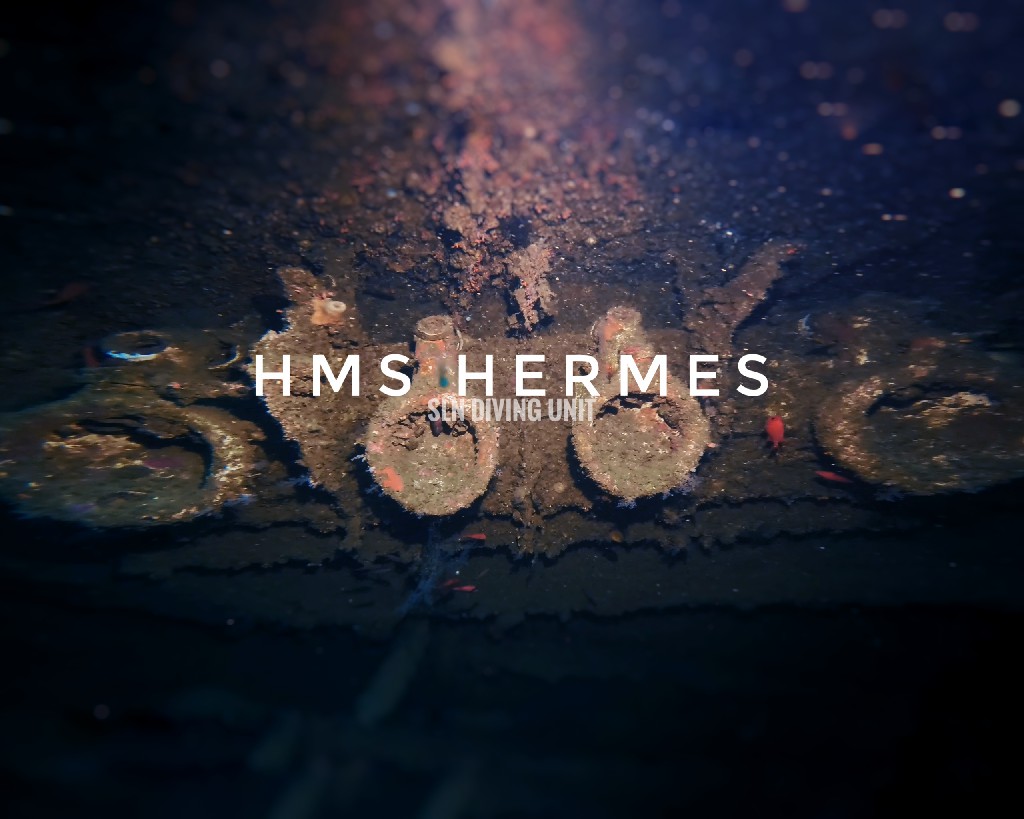
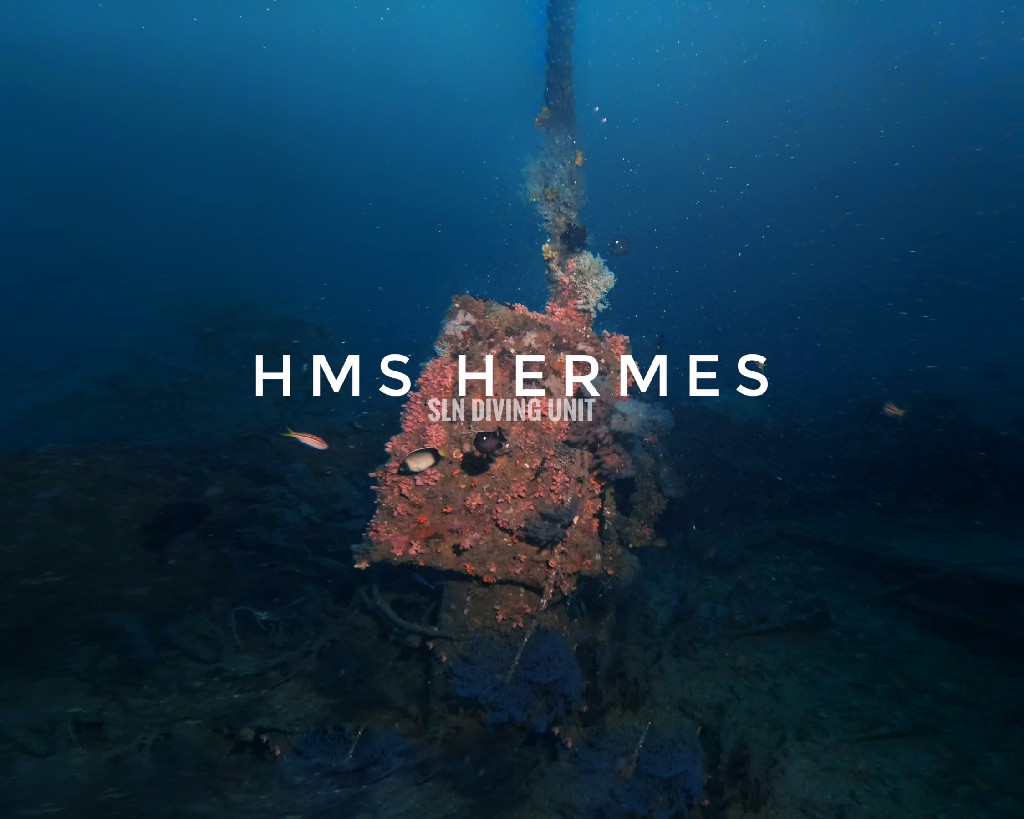
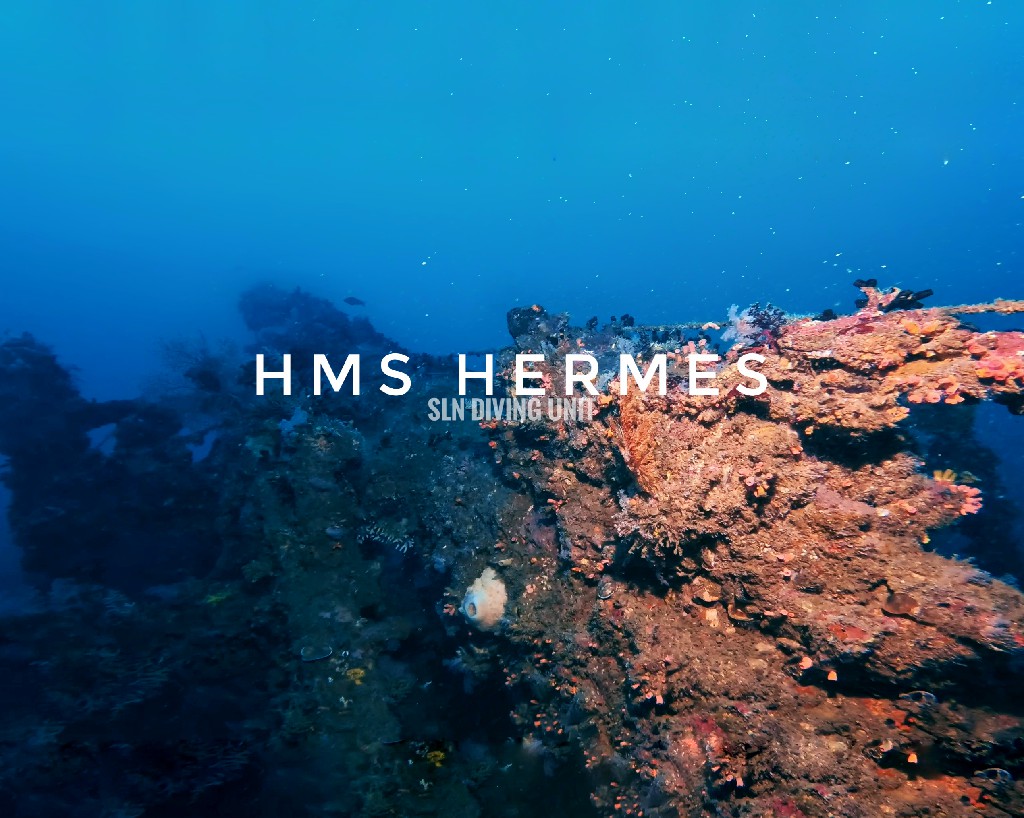
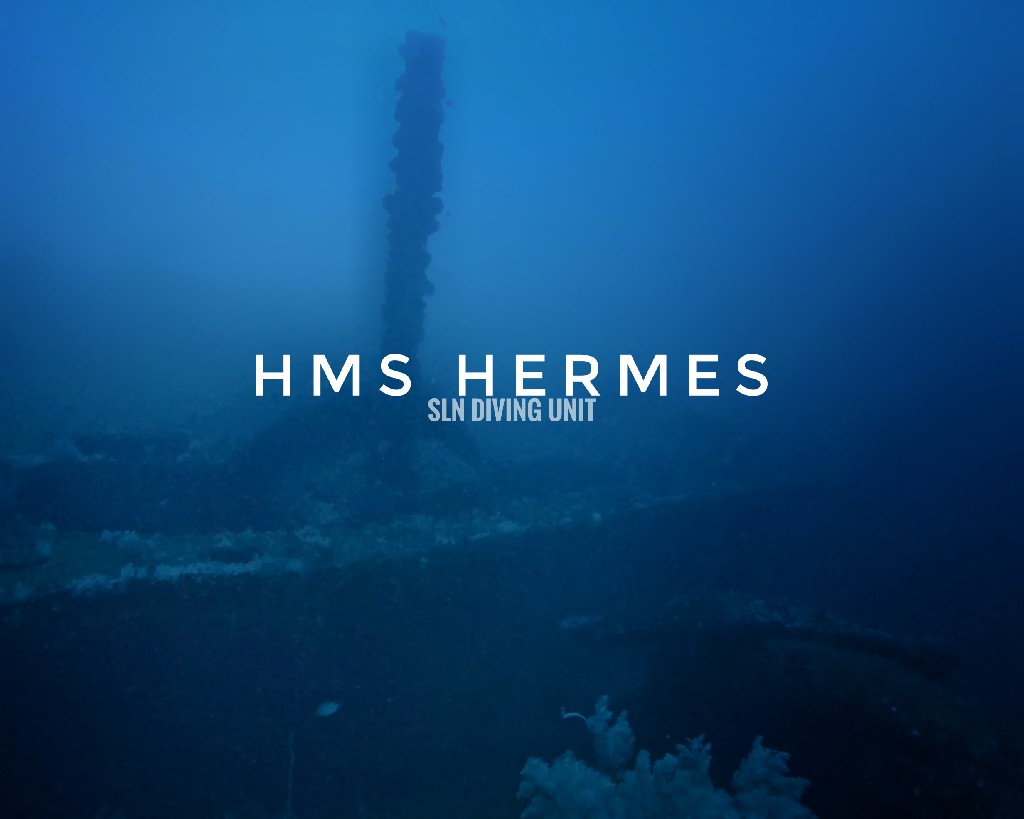
The immense steel hull rests heavily on its port side at a depth of 180 feet. Despite the severe bomb damage the wreck is largely intact though heavily compressed in certain areas. The observation tower lies settled on the sand. One of the 4 inch AA guns remains clearly identifiable pointing skyward as if frozen on watch. The large 5.5 inch medium guns are also identifiable just below the deck level.
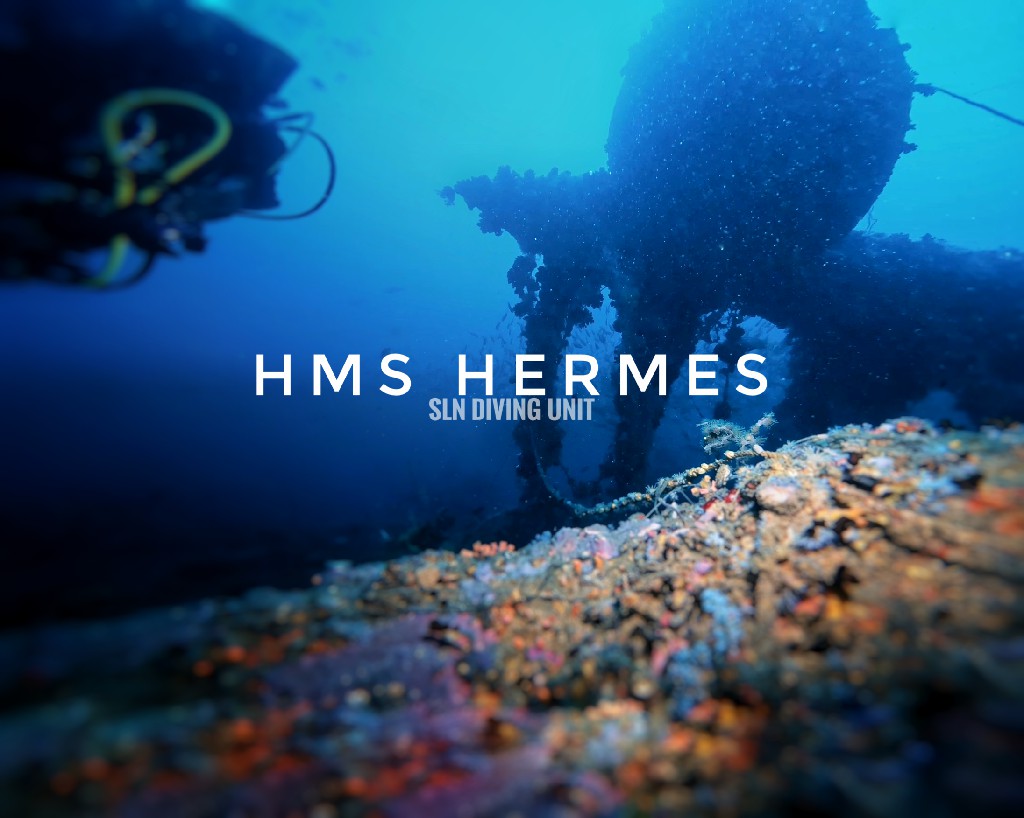
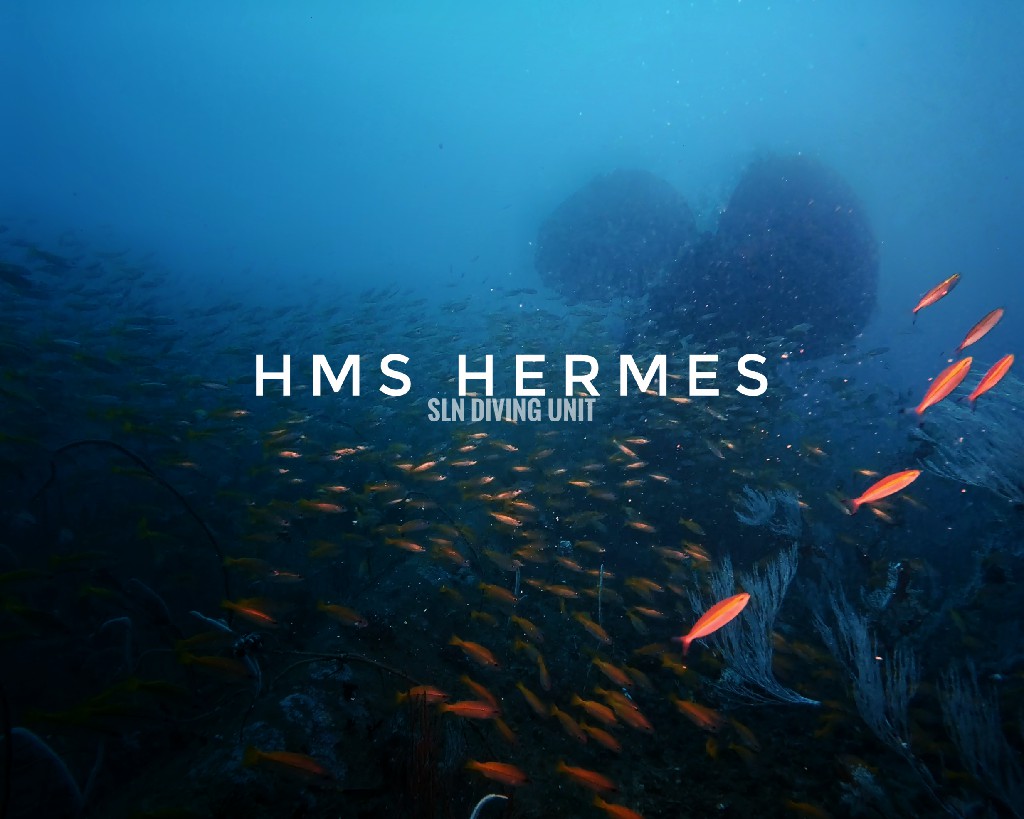
The starboard propeller is clearly visible, while the port side propeller lies submerged, reflecting the ship's initial rotation upon sinking. The structure is vast and fragmented in places, but divers easily trace key components of the carrier.
Depth is 180 feet and Visibility is often excellent 30-40 ft, Currents are generally mild, but can be swift and strong on occasion. Technical Diving or mix gas diving is required to dive.